Confessions of a Black Gentrifier

Interesting article that puts an interesting spin on the debate. Particularly resonant for me as I am always conscious when moving to a neighborhood that I will often be part of that first but invisible wave (of young black professionals that are non-native NYers) that can often herald demographic changes (especially socioeconomic changes) or what we sometimes imprecisely collapse into the term gentrification.
I was part of that wave in Prospect Heights and clearly now in Crown Heights- so much so that the neighborhood I first moved into looks nothing like it does now. Though the article puts a new spin on the debate- I was hoping that the gentrifiers (whether black or white) wouldnt be portrayed as thoughtless and entitled folk who dont care about the impact they have on the community that is receiving them. Outside of one thoughtful young man in the article named Derek- I felt many of those featured had the same attitude as the folks who moved into my old 'hood and thus made it a less desirable place for me to live. Also while the article tries to draw the conflict of gentrification as black professional newcomer vs. black middle class or poor oldtimer- the article is weakened by the fact that there arent prominent voices of black middle class oldtimers or poor black oldtimers sharing how they feel about the neighborhood changing.
Would love to hear what folks think of this article.This is especially timely as we are looking at the recent census figures and what they say about population shifts in Brooklyn.
Confessions of a Black Gentrifier: When demographic change doesn't involve color
By Shani O. Hilton on March 18, 2011
If you ask Aisha Moore about gentrification, her first inclination is to scoff.
Moore, a black resident of Congress Heights, says her Ward 8 street is “100 percent black” and that’s not likely to change soon.
“Nobody leaves,” she jokes. “On my block, if new people bought a house, it’s because an old lady died.”
Yet Moore isn’t from D.C. and has only lived in the city since 2002, after she finished an undergraduate degree at the University of California at Berkeley. In 2004, her boyfriend bought a house in Congress Heights and she moved in with him in 2009.
Which, by every metric except one—skin color—makes her as much of a gentrifier as the young white residents unloading moving vans near U Street NW every weekend. As we talk, Moore says she’s frustrated by the dozens of stories that feature handwringing over D.C. becoming “less black,” because they paint an incomplete picture.
... More at http://www.washingtoncitypaper.com/articles/40564/confessions-of-a-black-dc-gentrifier/
Comments
-
Interesting
-
yea, it was a long read, but a good one.
Some really good comments on it as well.
-
I had the sense that the author was paid by the word, and stretched out a short bitter truth into a protracted briny polemic.
Nevertheless, I am glad that I read it. The brother she quotes, Ngongang, said it best: "The fact is the only successful Black men we can point to are outliers. Random circumstances made them what they were.” This, for me sums up the paradox of being a 'gentrifier' as the author describes it. She makes the point that as a Black person she feels safer than her would be non-Black neighbors -- I let out a loud laugh when I read this as this is not my experience.
Ngongang also contradicts the author's notion that Blackness is an uber-camouflage when he recounts conversations with young kids who matter-of-factly stated that White people need have no fear of them, as it's the sad truth that most of the violence Whitefolks will hear about, or see will involve Black people hurting other Black people.I don't walk around here believing my skin is camouflage against danger, but rather I believe it makes me more likely to be the victim of some crime;recent history proves this to be accurate...
IF it does camouflage me, it's in the eyes of White people: I see Whitefolks who in different contexts look at me and smile and even talk, but when I pass them on the street, they look fearfully straight ahead; I'm just background to their experience. This makes the idea that gentrification is a good thing hard to metabolize when you are perceived as would-be criminal; just another one of the soon-to-be-gone-'Other' walking about, and someone not to talk to. The other day I recounted a scenario to a friend who nodded sympathetically and said, 'but surely you can understand why he didn't talk to you? Sadly, I can.
It's difficult to appreciate the gentry if you understand history, have the Black male experience, and have endured the concomitant sexism Black men suffer as a result of being perceived as Bigger Thomases, Clarence Thomases, or Uncle Toms. It's difficult to appreciate the gentry if you are aware of the historical inequity of how economic opportunities are granted to some groups in contrast to the constant struggle of Blackfolks have had through time -- just to keep afloat and stay ahead; Blackfolks constantly rendered weak by those who because of skin color and history have opportunities and money, and with only whim and can put your belongings on the curb at the end of the month because you can't pay the rent.
It's hard to see myself as 'gentry'; that word has always been a euphemism for 'whitefolks' to me, and putting the word Black before it reads like an oxymoron.
At the same time, I understand the need for change. There is so much pathos and misery in this neighborhood, and despite knowing the reasons why it exists, that doesn't solve the problem. Pathos is pathos, and the best one can do is not solve it, but rather push it aside. So, at the end of the day, the gentry's march will bring change, and for those few Blackfolks able to withstand the shift, a better standard of living. I hope my boat can stay afloat as the tide rises.
-
Good post MHA
CH, and NYC in general have been cities in transition for the past 250 years. As discussed in that poverty thread, recently the city gov't has seemed to unfairly and unreasonably push for change only benefiting those above some income threshold, with tough displacement ripples reaching as far as CH being the "collateral damage". To a large degree it's very unfortunate, but to a large degree living in a unique city comes with unique challenges. Hopefully the next NYC administration will have a broader + more long term view of the city and act to protect and advance everybody. Time will tell.
-
Though the treatment of this topic in the Washington City Paper city is a bit trite, I'm glad to see that some of the nuances of this topic are being explored in the media.
In order to really understand and discuss gentrification in a meaningful way, it is important to keep the nuances of race and class into perspective when addressing the topic. This topic is not always as black and white as it may seem.
There have been some pretty insightful coverages of the topic:
Essence Magazine - which explores the intra-racial conflicts that arise when black gentrifiers move into a predominantly black, lower income neighborhood.
and
NPR, which features an interview with sociologist, Mary Pattillo, who studied "black-on-black-gentrification" and white on black gentrification and explores the differences, similarities, and effects of both in a book that she wrote entitled "Black on the Block".
In the NPR interview, she suggests is that one of the major differences between black and white gentrifiers is their connection to the community. She describes the interests of white gentrifiers as being mostly economic, whereas she has found that black gentrifiers have a dual interest - both economic and socio-cultural (i.e. participating in a "renaissance" that they feel connected to).
On another note, one other part of this debate that is often overlooked, is the pivotal role that black landlords (and addition to their white counterparts) may have as gatekeepers in the process of gentrification. This is probably one of the more fascinating parts of the discussion.
(Plug: Our bloggers Abeni G. and Laurel B. are exploring this an other aspects in their "Gentrifying Brooklyn" film ... still in production)
A good portion of the landlords around here are older African-American investors, who purchased their places for 5 figures back in the 70s or otherwise inherited them from a relative. But for the house that they own, they might otherwise be considered lower-income. They do have a role to play in the neighborhood changes...
It's important to keep the nuances of race and class into perspective when addressing the topic.
-
I've always thought of the older Af-Am homeowners described by NostrandPark as being sort of like the family farmers in the Midwest.
Although (for the most part) they are free from the ignorant racist crap described by the article's author (and millions of others), the farmers find themselves in a similar situation after cashing in their property:
-They literally lose their way of life; Their former identity, neighborhood, friends, etc. all disappear.
-They cash out something that their ancestors worked incredibly hard to achieve.
-They often lack the skills, connections and education needed to quickly enter a new profession, or establish a new identity.
Let's not kid ourselves:
Change is brutally hard to adapt to, and even harder when you don't have class and race on your side. -
I think that one way of understanding differential impact of black and white "gentrifiers" and the particular intersection of their race and class means exploring their experiences. While MHA describes a profound sense of alienation
This makes the idea that gentrification is a good thing hard to metabolize when you are perceived as would-be criminal; just another one of the soon-to-be-gone-'Other' walking about, and someone not to talk to.
My experience of invisibility has do to with my sex- and is mostly empowering. Because I am a woman I am only occasionally going to be put in the criminal spot as generally black women are less likely than black men to be victimized when driving/walking while black. However, that protection of being invisible will only go so far when I am targeted for sexually based violence or have to interface with law enforcement.
But my experience is also firmly rooted in my class experience. Even though I am an outlier as a successful black woman and I know that the privileges I was born into were an accident of birth I feel somewhat secure in what I have attained. Unlike many of my neighbors, I made a choice to live here. Yes my choice was driven by economic forces but I am not a prisoner to this choice. The level of education I have attained and profession I work in makes it so I can pick up and leave if I want to. I imagine this is not the case of many gentrifiers who might be one paycheck away from disaster or many of the neighborhood oldtimers that might be living on the edge. Thats why I think it behooves people of consciousness to actually help in the hood that is receiving them.
Change sucks. I dont care if the general vector is of improvement- it sucks to not recognize the place where you live, to not be able to afford the new restaurants/grocery stores or to feel uncomfortable at the local watering hole. Thats just a taste of the root shock that people displaced by gentrification must feel.Fullilove describes root shock as
the loss of a massive web of connections
as a result of displacement. Hell I felt the frustration as I saw my adopted neighborhood change and realized that rents kept raising and my landlord didnt care about my years and years as a good tenant cause they could get higher rent paid by some Midwestern white kid who read in the New Yorker that Prospect Heights was "Park Slope with edge". Hell I felt the frustration as I couldnt get a drink at the new bar in the neighborhood and learned that my kind wasnt really welcome there. But I dont delude myself to think that these minor inconveniences even approach the economic vise being applied to inhabitants who may be at the same time suffering from and benefiting from gentrification.Gentrification isnt a simple topic to discuss. But I think its necessary or gentrifiers will be making more of a problem instead of being agents for positive change. And the only way to do that is to become a part of the community and actually become embedded in its social fabric.
-
Trumystic said:
Gentrification isnt a simple topic to discuss. But I think its necessary or gentrifiers will be making more of a problem instead of being agents for positive change. And the only way to do that is to become a part of the community and actually become embedded in its social fabric.Could not agree with that sentiment more. In fact, posted something very similar in the Bed-Stuy section a week ago:
http://brooklynian.com/forum/fort-greene-clinton-hill-bed-stuy/bed-stuy-do-or-die
-
Here's a very interesting article about what's going on the suburbs of Detroit. When race is a non issue, the much bigger and usually swept under the rug class issue rears it's ugly head.
"I've got people of color who don't want people of color to move into the city," says Southfield Police Chief Joseph Thomas, who is himself black. "It's not a black-white thing. This is a black-black thing. My six-figure blacks are very concerned about multiple-family, economically depressed people moving into rental homes and apartments, bringing in their bad behaviors.
Some blacks just don't want to live near other blacks, she says: "There is classism within the black community. The foreclosure crisis may be accelerating it." But she says middle-class blacks, like middle-class whites, are also put off by behavior of impoverished blacks who "have developed their own culture, one that is very different from mainstream America.""
-
@clayfilms ... thanks for the article. good read.
-
Clayfilms, interesting article though I am concerned by the tone and especially the quotation you posted. I think too many confuse
lower income=low class= crime+drugs+ deviant behavior etc a la Bill Cosby. But I think most lower income people are just trying to get by and raise their families like everyone else. Thus people are confusing dysfunction within lower income communities and thinking that is an innate property of being lower income. Class prejudice is rife in a lot of the discussions about gentrification. So great to see these articles talking about the experiences of black folk and thus bringing these assumptions to the fore. One quotation from this that I think sums it up and that I would call the Black Gentrifier's Burden:Those who contemplate fleeing have fallen into what Cashin calls the "black middle-class dilemma."
"You have a choice of whether you are willing to be around your people or go 180 degrees in the other direction," she says. "To the higher income black people, if you don't want to love and help your lower-income black brethren, why would you expect white people to? If you can't do it, no one in society can do it. You can try to flee or you can be part of the solution."
-
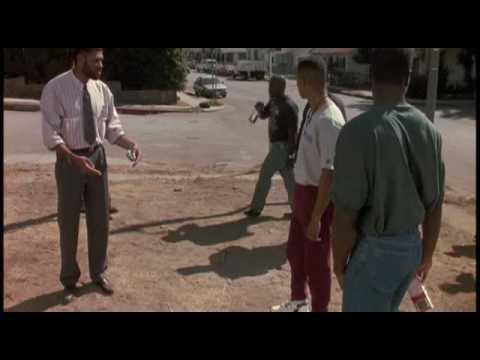
yeah..this is nothing new..bottom line..the hood needs more fathers like furious styles..lol
-
Whenever I see that clip, I find myself strongly agreeing with the guy with the cane AND the guy with the tie.
Then, I conclude the truth is somewhere in the middle.
-
the logic about the gun stores and liquor stores is pretty interesting. same with the crack -- "we don't smuggle it, therefore it's not our fault!"
-
"I've got people of color who don't want people of color to move into the city," says Southfield Police Chief Joseph Thomas, who is himself black. "It's not a black-white thing. This is a black-black thing. My six-figure blacks are very concerned about multiple-family, economically depressed people moving into rental homes and apartments, bringing in their bad behaviors.
this is just a controversial way of saying something that really shouldn't be controversial at all: the people he's talking about don't want to live near bad behavior.
-
Some blacks just don't want to live near other blacks, she says: "There is classism within the black community. The foreclosure crisis may be accelerating it." But she says middle-class blacks, like middle-class whites, are also put off by behavior of impoverished blacks who "have developed their own culture, one that is very different from mainstream America."
I'd be more surprised if this was NOT the case.
Imagine, if you will, a largely white suburban cul-de-sac that has stable property values.
Now imagine that the development is located next to a large tract of land that is ripe for development. If the present residents learned that a trailer park was proposed for the site, and they feared low income whites with "crime+drugs+ deviant behavior etc" to move in: They would fight like hell to stop it.
As trumystic points out, such class prejustice is just as unfounded as the variety that is based on skin color.
...but let's no kid ourselves, our own sense of "who we are" may be even more wrapped up in social class than color.
Clearly, people are born with an assigned color and they can't do much about it. However, we like to believe that our social class is at least partly due to our own accomplishments.
It may be easier to distance one's self from their skin than their accomplishments.
-
Mr Met, black does not equal bad behavior. Nor does being poor equal bad behavior. When people use language to convey that they believe poor and black people are badly behaved then the person with these assumptions will be called racist or classist. It's really not that simple at all.
The point which I think Whynot is trying to make is that many black middle class gentrifiers can't see how class prejudiced they are, white middle class gentrifiers can't see how racist/classist they are being with the coded words they use.
Look at press from Boston that covers the gentrification of South Boston (formerly called the nation's largest white ghetto). However, the coverage of Southie clearly notes that a small percentage of the poor population was involved in crime and drugs. Also the stories acknowledge and even romanticize the history of the Southie BEFORE the gentrifiers arrived.
Many gentrifiers caught up in the fantasy that they are pioneers and "are a part of change for the better" forget the neighborhood had a vibrant history and culture before they moved in.
-
While trumystic accurately refers to the neighborhood of Southie as a ghetto, in my experience it is frequently referred to in more generous terms: a "working class neighborhood". To me, this term connotes that a small percentage of the population is involved in drugs and crime, and the vast majority of the population is working and honest.
On the other hand, a black neighborhood is assumed to be a "ghetto"; a word with a much different, harsher meaning. In my experience, people often feel the need to clarify when that is not the case. For example, I often hear, "It's a mostly black neighborhood, but it isn't a ghetto."
Or, on a more individual basis: "She is black, but she is not ghetto". As a result of how education and opportunities are distributed in this country, it is pretty rare for me to hear people need to make similar clarifications, such as: "He is white, but he is not white trash"
But let's stick with the safer topic: How language is used to describe neighborhoods. Perhaps because I am a stickler, I try to use the term "ghetto" to refer only the worst neighborhoods of the city.
While pockets of Crown Heights still suck to live in, most are far better than they were in the 80s and 90s. ...and they do not approach the problems currently and recently faced by neighborhoods such as East NY, Bushwick, or Far Rockaway.
When one looks at the data, I suspect one will also find that Crown Heights is also far better off than some of the huge, meth-infested white trailer parks in the mid-west.
So, I proudly declare the following:
Whether you are black or white, if you have moved to Crown Heights, you have not moved to a "ghetto". ...but I do hope you do as much as you can to make it even better than it is.
P.S. These are the topics that give one carpal tunnel, and this medium is a major obstacle to productive conversations. Among other things, I lack intonation.
...perhaps a conversation in real life?
-
Mr Met, black does not equal bad behavior. Nor does being poor equal bad behavior.
No one said it does.
When people use language to convey that they believe poor and black people are badly behaved then the person with these assumptions will be called racist or classist. It's really not that simple at all.
Oh, I have no doubt that they will be called racist or classist. That's the problem. Recognizing statistical realities does not make you a racist. I would argue that the natural impulse that many people have to throw the word "racist" around hampers any real progress. Until people are willing to recognize the realities and tackle them honestly, without instinctively searching for someone to blame or call a racist, I don't think there is any hope to change the status quo.
-
While we are discussing labels that are not productive, dare I bring up the label "oreo"?
This label also assumes that all blacks must think and act a certain way, and that they are somehow being "disloyal to their race" when they differ.
you know, like the cookie: black on the outside, but white on the inside?
Lots of stupid ideas in the world.
....inherent in the definition is that all white people think alike.
??
-
put off by behavior of impoverished blacks who "have developed their own culture, one that is very different from mainstream America
and
My six-figure blacks are very concerned about multiple-family, economically depressed people moving into rental homes and apartments, bringing in their bad behaviors.
Mr Met clearly the people being interviewed in these articles allude to the frames "poor folk have no class" and "black folk are low class" (the latter usually in the white vs black gentrification stories). Perhaps you interpret things differently- cause its as clear as day to me. I like calling it as I see it and I can also continue having a rational discussion. I dont think you can change the status quo by coddling people that are prejudiced. First, they have to admit their prejudice and then we can move from there.
"Recognizing statistical realities does not make you a racist". What statistical realities are you talking about? The numbers arent just numbers. People use stats to make extremely value laden statements all the time. So I am genuinely curious to hear what statistical facts you think back up alot of the statements usually made in these gentrification articles.
-
Trumystic seems to be excited at the prospect of ensnaring a "closet racist"
Trumystic lets just put some things out there OK
In NYC, and around the country, primarily black neighborhoods tend to be poorer, and from that they tend to have more crime. I don't think anyone has made any inferences on the characters of black people in general here besides you in the hopes of race baiting.
When looked at from a socieoeconomic POV, removing race from the equation, the fact of the matter is, obviously all, or not even a majority of poor people are not criminals, but a higher percentage of poor people are. So when people with higher incomes & education etc move into poor neighborhoods- be they black, white, whatever- with them comes a change in the demographic that does lower crime. When you remove "black/white" from the discussion it's all very logical. I don't think this thread is the place to explore the reasons why poor people commit more crime or why black people are disproportionately poorer, but the fact of the matter is, NYC's poor neighborhoods have more crime and also tend to have higher percentages of minorities. I don't think stating those facts is making any kind of connection or inference one way or another; but if people can't speak honestly w/o being pegged as racist because such facts offend people's sensibilities we can never have an earnest discussion about anything to do with race. Not really a environment conducive to any kind of progress
-
put off by behavior of impoverished blacks who "have developed their own culture, one that is very different from mainstream America
what about this do you disagree with? what do you take issue with the idea that this culture exists?
My six-figure blacks are very concerned about multiple-family, economically depressed people moving into rental homes and apartments, bringing in their bad behaviors.
i don't really see the significance of people wanting and tending to live with others of the same socioeconomic status. isn't that just the way the cookie crumbles? i also don't really understand why it matters that the "six-figure" people referenced in the quote are black.
I dont think you can change the status quo by coddling people that are prejudiced.
we might be talking about different status quos. i was talking about the relative economic deprivation of blacks in america. it obviously exists, so why not change it rather than try to protect it?
What statistical realities are you talking about? The numbers arent just numbers. People use stats to make extremely value laden statements all the time. So I am genuinely curious to hear what statistical facts you think back up alot of the statements usually made in these gentrification articles.
there are plenty that i think are relevant, such as: violent crime stats (specifically murder and gun violence), incarceration rates, percentage of families headed by single mothers, educational opportunity and achievement, among others. i agree that some people take these stats and come to prejudicial conclusions, and that is wrong. but these stats are stats, and, in my opinion, only when they are addressed honestly and critically can the status quo that i mentioned above be changed. just my opinion.
-
Some blacks just don't want to live near other blacks
i'd argue that the very idea that this is a problem is counterproductive. why is this strange or even noteworthy?
-
CTK-
Yes, it is the classic "correlation vs causation" problem. Here's a quick example:Fact: In the summer, the sales of ice cream increases.
Fact: In the summer, crime increases.One could create a graph that showed the sales of ice cream is directly correlated to the amount of crime in a given month. One could create a similar graph depicting temperature and crime.
However, only a fool would imagine that ice cream or temperature CAUSED crime. Based on this belief in "causation", this same fool would likely try to ban ice cream sales based on such data. They might tell us to move to Alaska as well.
....Clearly lots of people eat lots of ice cream, yet commit no crimes. Clearly lots of people live in hot as hell deserts, yet commit not crimes.
Still with me?
...this same little exercise could be done regarding someone being black and therefore being a criminal. Everyone could determine that there is a correlation, but only the lazy would declare there was actually a causation.
...this same little exercise could be done regarding income and education (aka "class"), and the poor's propensity to commit crime. Everyone could determine that there was a correlation, but only the lazy would declare there was causation.
Trumystic,
Accurately determining whether Mr. Met sees a correlation or causation between variables is very difficult on a message board.He states above that he does not. To me, his posts do not indicate that he does.
Because I believe that everyone on earth tries tries to understand their surroundings in an effort to keep ourselves safe, and that the vast majority of us use many variables to determine whether someone is likely to do harm, ....my experience is that such conversations are most productive in person.
As you have discussed, even though the concepts involved in race and class are complicated, understanding them does not make one able to predict crime or "bad behavior". You accurately point out that people are waaaay more complex than the color of their skin, or their social class.
Those who are willing to put in a little mental work conclude the same thing.
I do not believe that you have enough evidence to conclude that Mr. Met is among those that places "too much weight" on the variables of race and class.
....but, of course, you are free to interpret his posts and declare causation if you wish.
-
Cool The Kid, are you really trying to say that these news stories arent using these memes "poor folk have no class" and "black folk are low class"? Cause if you cant then I think we see things very differently and thats why its hard to communicate. Its clear people have different definitions of what "class", "classy", "lack of class" means so I can see having discussion around those terms. But to refuse to see that this is the subtext boggles my mind.
Thats why press around Southie is so interesting because you can see how most gentrification articles are racially loaded. Conversely, these articles about black on black gentrification point out the key issue which is social class. Whynot makes interesting points that a lot of the coverage of Southie tries to make nuanced distinctions about working class people. But here's the kicker: why isnt the distinction made for black neighborhoods? Poor white people live in working class neighborhoods (never ghettos or only rarely poor 'hoods). Poor black people live in ghettos. For all the reasons Whynot suggested this makes a difference in the collective consciousness.
I am not trying to "snare a closet racist" rather I am trying to point out assumptions and statements that are problematic and or classist/racist.
Let's try an example of statements linking poverty and crime:
A1)Statistics say that poor people commit more crimes than middle class people
A2) Statistics say that a higher proportion of the poor population is incarcerated compared the middle class population.Lets compare 2 other statements bout race and crime:
B1) Statistics say that blacks commit more crimes than white people
B2) Statistics say that a higher proportion of the black population is incarcerated compared to the white populationThose are very different statements. Which ones are problematic? Which ones might bolster class based prejudice? Or race based prejudice? If someone cant see the differences in the above statements I am going to point that out. So, if you think this discussion or environment isnt conducive to "any kind of progress" then you arent being forced to participate.
-
I am not trying to "snare a closet racist" rather I am trying to point out assumptions and statements that are problematic and or classist/racist.
Trumystic-
Can I give you advice?First you should find someone who disagrees with your goals. ...then, go at them.
However, presently, it seems as if you are going after posters for not expressing themselves in a tedious medium in the exact way you desire.
For example, the same post I am typing (and you are reading) can be interpreted in a variety of ways.
Am I typing in a snide tone?
Am I sarcastic?
Am I sincere?
Am I making eye contact?
Am I telling you that you must believe what I believe because I am an authority?
Am I disagreeing with your ultimate goal of having people open their minds, or cheering you on?
Can we be given the benefit of the doubt, and have you assume that we are not disagreeing with your goals, but we ARE disagreeing with the speed and means you are using to try to achieve those goals?
For example, do you believe that I believe that an in person conversation is the only way to hold such conversations without misunderstanding that quickly kill the conversation?
Do I (and perhaps others) want to meet you and have this conversation, or do I just want you to stop posting?
....my suggestion is the polar opposite of "avoiding the conversation".
-
Let's try an example of statements linking poverty and crime:
A1)Statistics say that poor people commit more crimes than middle class people
A2) Statistics say that a higher proportion of the poor population is incarcerated compared the middle class population.Lets compare 2 other statements bout race and crime:
B1) Statistics say that blacks commit more crimes than white people
B2) Statistics say that a higher proportion of the black population is incarcerated compared to the white populationThose are very different statements. Which ones are problematic? Which ones might bolster class based prejudice? Or race based prejudice?
i'm not sure what you're getting at here, but, assuming all of these statements are statistically true, then none of them are problematic in and of themselves. who cares if a statistic CAN bolster prejudice? a lot of things CAN be interpreted in the wrong way. but those same things can be interpreted in a constructive way.
personally think that these types of statistical findings, while startling and disturbing, should be addressed head-on.
-
Mr Met:
put off by behavior of impoverished blacks who "have developed their own culture, one that is very different from mainstream America
what about this do you disagree with? what do you take issue with the idea that this culture exists?
I disagree with the embedded assumption that all impoverished blacks have a deviant culture that glorifies drugs, crimes and out of wedlock birth. Or that necessarily economically depressed people bring bad behavior along with them. This Jerry Springer-Maury Povich axis of culture exists but that isnt the culture of most poor black people. Why cant we acknowledge that poor black people are working poor black people?
i don't really see the significance of people wanting and tending to live with others of the same socioeconomic status. isn't that just the way the cookie crumbles?
We are talking about different articles that describe different waves of migration. The article about DC is about black middle class people moving into poor neighborhoods thus gentrifying the hood. The other article is about poor black people moving into black middle class hoods in the suburbs of Detroit. So if a black middle class person in the DC article were to say "I dont want to live around poor people" then I would wonder why the fuck they moved to the hood. For that same middle class black person in suburban Detroit to make that statement I could understand it-but would likely to think its narrow minded.
I think the WNYC piece that Nostrand Park linked to is a great one and is worth listening to.
-
trumystic-
I disagree with the embedded assumption that all impoverished blacks have a deviant culture that glorifies drugs, crimes and out of wedlock birth.
Have you found that Mr. Met, CTK, or myself argues this is the case?
Mr. Met.-
mr. met said:
Let's try an example of statements linking poverty and crime:
A1)Statistics say that poor people commit more crimes than middle class people
A2) Statistics say that a higher proportion of the poor population is incarcerated compared the middle class population.Lets compare 2 other statements bout race and crime:
B1) Statistics say that blacks commit more crimes than white people
B2) Statistics say that a higher proportion of the black population is incarcerated compared to the white populationThose are very different statements. Which ones are problematic? Which ones might bolster class based prejudice? Or race based prejudice?
i'm not sure what you're getting at here, but, assuming all of these statements are statistically true, then none of them are problematic in and of themselves. who cares if a statistic CAN bolster prejudice? a lot of things CAN be interpreted in the wrong way. but those same things can be interpreted in a constructive way.
personally think that these types of statistical findings, while startling and disturbing, should be addressed head-on.
Yes, One must use their intellect to digest any such data, and statistics can be made to justify any pre-conceived conclusion.
For example, by learning that 90% of the people in prisons are minorities and/or poor, I could conclude the following:
1. 90% of minorities are criminals. (wrong!)
2. The criminal justice system is biased against minorities. (yes, and no)
3. Wow, we have a large group of people in society who feel no connection to the larger society. ...and many of them are minorities. (yes)
Obviously, one would view minorities and "what change is needed in the US" based on which of the above three conclusions reached.


Howdy, Stranger!
Categories
- 40K All Categories
- 27.1K Neighborhoods
- 5.1K Crown Heights/Prospect Lefferts Gardens
- 7.1K Prospect Heights
- 2.3K Fort Greene, Clinton Hill, Bed-Stuy
- 8K Park Slope
- 549 Williamsburg, Greenpoint, Bushwick
- 442 Flatbush/Midwood/Ditmas Park
- 657 BoCoCa (Boerum Hill, Cobble Hill, Carroll Gardens)
- 151 Red Hook
- 104 Gowanus
- 304 Bay Ridge/Bensonhurst
- 130 Coney Island, Brighton Beach, Sheepshead Bay
- 270 Brooklyn Heights, DUMBO and Downtown
- 598 Windsor Terrace / Kensington
- 673 Greenwood Heights and Sunset Park
- 749 Brooklyn and Beyond
- 6.3K Stuff
- 86 Brooklyn Back When
- 1.2K Brooklyn Pets
- 257 Brooklyn Kids
- 241 Brooklyn Eats
- 51 Brooklyn Booze
- 3.6K The Lounge / Random Stuff
- 611 Brooklyn Politics
- 122 Brooklyn Sports and Fitness
- 111 Brooklyn Photos
- 339 Site Issues
- 8 Frequently Asked Questions (FAQ)
- 6.2K Listings
- 1.1K APARTMENTS and REAL ESTATE
- 1.3K Sales Openings Events
- 2.3K The Classifieds