Confessions of a Black Gentrifier
Comments
-
I don't see any memes or veiled language being used. The only way I can see a problem with the article is in if you feel that people are lying. When the inner city folks moved into those suburbs they brought behaviors with them that were deemed unacceptable by those already there...
I agree that the quote "people of color not wanting people of color to move in" was a bit wrongly worded, but that was said by a black police chief. I don't want to put words in his mouth, he said what he said, but I think he meant to say suburban black people don't want inner city black people moving in. That's no issue of race, it's of class; his wording was just wrong.
Removing race from the picture it's true, poorer areas tend to have more crime & quality of life issues you don't see as you go into areas of higher property value/household income. Is that wrong to point out in a discussion about gentrification? Is it slanderous innuendo? I say no and no. If we can't even acknowledge that things happen in the inner city that don't happen elsewhere w/o being labeled racist we can't have an honest discussion.
And saying things happen in the ghetto that don't happen elsewhere isn't an indictment of EVERYONE in the ghetto. All it takes is a few bad sheep or a higher incidence of certain behaviors to draw a conclusion. Obviously every young black male isn't a criminal, but for whatever reason we have a disproportionate amount of criminals among us compared to other groups. Likewise ALL people from the inner city don't exhibit the behaviors complained about in that article, but compared to other groups there are higher incidences of people within that group who do exhibit those behaviors than in other groups. Is that wrong to point out?
-
If we were nit picky we could point out to CTK that a lot of criminal activity and anti-social behavior is present in white occupied trailer parks, and berate him for not pointing that out again, even though it was mentioned above.
(I'm just trying to show how this medium can be used to indict well meaning people)
trumystic, Please let me know when I can stop making this point.
-
I disagree with the embedded assumption that all impoverished blacks have a deviant culture that glorifies drugs, crimes and out of wedlock birth.
i guess that assumption wasn't embedded deep enough for me to recognize it.
-
And saying things happen in the ghetto that don't happen elsewhere isn't an indictment of EVERYONE in the ghetto. All it takes is a few bad sheep or a higher incidence of certain behaviors to draw a conclusion. Obviously every young black male isn't a criminal, but for whatever reason we have a disproportionate amount of criminals among us compared to other groups. Likewise ALL people from the inner city don't exhibit the behaviors complained about in that article, but compared to other groups there are higher incidences of people within that group who do exhibit those behaviors than in other groups. Is that wrong to point out?
+1.
gun violence and disturbing incarceration rates affect the black community at a rate greater than any other. recognizing this and wanting to deal with it does not mean that one thinks everyone in the black community is a criminal.
We are talking about different articles that describe different waves of migration. The article about DC is about black middle class people moving into poor neighborhoods thus gentrifying the hood. The other article is about poor black people moving into black middle class hoods in the suburbs of Detroit. So if a black middle class person in the DC article were to say "I dont want to live around poor people" then I would wonder why the fuck they moved to the hood. For that same middle class black person in suburban Detroit to make that statement I could understand it-but would likely to think its narrow minded.
totally fair. i guess my comments don't directly address gentrification, so my fault.
-
Whynot, you have repeatedly said this is not the forum you would prefer to discuss these issues. I hear you. I think there are some advantages and disadvantages to this medium. But I am not sure why you are giving me advice or suggesting that I am "going after people" because I am asking them to clarify what they posted. This is a conversation on a message board, right?
Mr Met, I think that you cant solve the problem unless you name it and understand its scope. The problem can be crime, poverty, racism or class based prejudice. So if someone starts the conversation with statement A1 and B1 ( which arent factually correct) I am going to point that out and see where else they are going. Did they in fact misspeak? Or do they actually believe that poor or black people bring crime with them? If they think the latter than its hard for me to think that I can in fact have constructive communication with that person. We in fact might have common viewpoint or we might not- but that requires more information and clarification.
-
Trumystic said:
Whynot, you have repeatedly said this is not the forum you would prefer to discuss these issues. I hear you. I think there are some advantages and disadvantages to this medium. But I am not sure why you are giving me advice or suggesting that I am "going after people" because I am asking them to clarify what they posted. This is a conversation on a message board, right?Absolutely.
However, you may conclude, (like I have) that we will type endlessly about such things, but that very little progress is made unless in person conversations occur.
I was giving you such advice because many people find it very tedious to have to repeatedly ask people to clarify things, others become easily offended and conclude that they are the only intelligent people on earth.
....and then, in the event that they disappear, it is assumed that people are either "afraid to talk about such issues", or have been successfully "owned" by their opponent.
I was also making sure that you knew to have a thick skin on these boards, because we tend to have a culture and style of confrontation you may be unfamiliar with. ...In my view it we pretty fairly apply it. I like to think of the political and racial discussions on this board as being "rigorous", but I suspect many people disagree with my use of this term.
I also find that some do not have the time to escape from work to carry on such discussions, causing annoying luls in the conversation.
....but if you feel the exercise is fruitful, keep typing.
I've never discouraged anyone from typing. That would be an odd, hypocritical stance for me to make ....esp in light of having over 8000 posts on this thing.
(did you get the humor in that last statement, or did you find it to be snide? By pointing the limits of this medium, am I beating a dead horse or being helpful? ...I can't tell from your facial expression. Was that an exasperated sigh, or an amused laugh you just made?)
and now, fun with punctuation:
A woman: Without her, man is nothing.
A woman, without her man, is nothing -
mr. met said:
And saying things happen in the ghetto that don't happen elsewhere isn't an indictment of EVERYONE in the ghetto. All it takes is a few bad sheep or a higher incidence of certain behaviors to draw a conclusion. Obviously every young black male isn't a criminal, but for whatever reason we have a disproportionate amount of criminals among us compared to other groups. Likewise ALL people from the inner city don't exhibit the behaviors complained about in that article, but compared to other groups there are higher incidences of people within that group who do exhibit those behaviors than in other groups. Is that wrong to point out?
+1.
gun violence and disturbing incarceration rates affect the black community at a rate greater than any other. recognizing this and wanting to deal with it does not mean that one thinks everyone in the black community is a criminal.
We are talking about different articles that describe different waves of migration. The article about DC is about black middle class people moving into poor neighborhoods thus gentrifying the hood. The other article is about poor black people moving into black middle class hoods in the suburbs of Detroit. So if a black middle class person in the DC article were to say "I dont want to live around poor people" then I would wonder why the fuck they moved to the hood. For that same middle class black person in suburban Detroit to make that statement I could understand it-but would likely to think its narrow minded.
totally fair. i guess my comments don't directly address gentrification, so my fault.
Mr. Met sounds like a horrible person.
(sarcasm?)
-
mr. met said:
I disagree with the embedded assumption that all impoverished blacks have a deviant culture that glorifies drugs, crimes and out of wedlock birth.
i guess that assumption wasn't embedded deep enough for me to recognize it.
ah, now we are getting somewhere. Everyone uses race and class in order to determine things about a person, but different people allow themselves to assign different weights to the factors. Mr. Met calls this the degree to which the factors are "embedded".
For example, if you are a member of the Klu Klux Klan, you assign a huge percentage of your opinion of someone based on their race. ....and you likely have eugenics at the core of your belief system (aka world view). They have a belief system that supports CAUSATION between race and factors such as drug use and criminal activity. The belief is embedded in them.
[in my opinion, the Klan ignores the effects of hundreds of years of past and current oppression in this country. I'm also not a fan eugenics.] ....did I need to type the parts between the [ ]?
Conversely, if you are a member of the Ayn Rand or John Birch society, you assign a huge percentage of your opinion of someone based on what social class they have achieved. Such societies are based on the belief that hard work can give people unfettered success, and from this premise declare that there is CAUSATION between anyone who is lower class AND laziness and unproductive behaviors (such as using drugs). The belief is embedded in them.
[in my opinion they ignore the fact that hard work alone will not make you rich, nor will it make you middle class] ....did I need to type the parts between the [ ]?
Clearly the majority of people in this country don't hold such extreme views, so we are merely discussing to what DEGREE they allow class and race to influence their opinions of others, right?
....no one is claiming that they are free from prejustice based on class and race, right? ....no one is claiming that they haven't given a just a little thought to the merits of eugenics and "hard work", right?
-
Cool the Kid said
I don't see any memes or veiled language being used. The only way I can see a problem with the article is in if you feel that people are lying. When the inner city folks moved into those suburbs they brought behaviors with them that were deemed unacceptable by those already there..
I dont think the people in the article are lying. Suburban folks clearly had a problem with what they termed unwanted behavior. What was the behavior specifically though? Sitting on your stoop or front yard? Not mowing your lawn? Having a loud party? Drive by shootings? Trash left in the front yard or street? Those are all different kinds of unwanted behavior.
Thats why the WNYC piece is interesting. It points out that many of these tensions come from assumptions some founded and some not. For example people assume that poor people are engaging in behavior because of lack or morality or bad behavior. Instead, it might be because they dont have the money for upkeep or they are engaging in habits they have from their old hood i.e stoop sitting.
And I firmly believe these negative sentiments/veiled language are embedded in many gentrification articles as well as discussions of the inner city. You give a perfect example when you said "suburban black people don't want inner city black people moving in". In otherwords, I think these are morally equivalent and problematic statements voiced in these and other articles:
* I dont want to live near lower income people
* I dont want to live near black people
which is different than:
* I do not want to live near poorly behaved people who do X.The first 2 statements I deem prejudiced statements. I wont apologize for that conclusion. And I also wont apologize for trying to get you to see that those statements are diametrically opposed in meaning and intent.
-
Is there some kind of Unified Protocol of Gentrification Conversations memo that I missed? I started by posting an article that I thought was interesting. My only goal was to find out peoples reactions and thoughts and have a conversation about race and class. OMG yes on a message board. Other people posted articles that were interesting to them. Some of your reactions were positive to some of the articles. My reaction to the Detroit and Atlanta article was complicated and I pointed out my issues with the language especially classist language. Further, I asked posters to clarify their posts too.
And there is a problem with this why? Why is this interpreted as "race baiting", "going after people" or "indicting people"?
-
As an anarchist, I would rip up any such memo
-
Trumystic said:
Cool the Kid saidI don't see any memes or veiled language being used. The only way I can see a problem with the article is in if you feel that people are lying. When the inner city folks moved into those suburbs they brought behaviors with them that were deemed unacceptable by those already there..
I dont think the people in the article are lying. Suburban folks clearly had a problem with what they termed unwanted behavior. What was the behavior specifically though? Sitting on your stoop or front yard? Not mowing your lawn? Having a loud party? Drive by shootings? Trash left in the front yard or street? Those are all different kinds of unwanted behavior.
They listed the behaviors pretty explicitly, and some were behaviors that in my estimation would be unacceptable in CH/BS... disrespecting other people's property, holding up traffic walking in the middle of the street, carrying on loudly in the middle of the night, etc....
Thats why the WNYC piece is interesting. It points out that many of these tensions come from assumptions some founded and some not. For example people assume that poor people are engaging in behavior because of lack or morality or bad behavior. Instead, it might be because they dont have the money for upkeep or they are engaging in habits they have from their old hood i.e stoop sitting.
This is a good point. However, just as you want to give benefit of doubt to the motives of the behaviors of inner city folks in a suburban environment, for the sake of equity we have to give that same benefit of doubt to gentrifiers. Both parties are people moving to new environments that best serve their needs within their means. And I don't think inadvertently raising rents because changing geo-economics force one out of the neighborhoods they would choose otherwise is equivalent to directly disrespecting or disregarding one's neighbor's property and peace of mind, for a litany of reasons I'd rather not have to repeat but think are pretty obvious and can elaborate on if asked.And I firmly believe these negative sentiments/veiled language are embedded in many gentrification articles as well as discussions of the inner city. You give a perfect example when you said "suburban black people don't want inner city black people moving in". In otherwords, I think these are morally equivalent and problematic statements voiced in these and other articles:
* I dont want to live near lower income people
* I dont want to live near black people
which is different than:
* I do not want to live near poorly behaved people who do X.The first 2 statements I deem prejudiced statements. I wont apologize for that conclusion. And I also wont apologize for trying to get you to see that those statements are diametrically opposed in meaning and intent.
I see an obvious issue with the second statement, but not the first, if it is changed to "poor inner city people". For the thousandth time, most inner city people are not bad people or criminals or whatever. But there is a correlation between poverty & crime, as well as between certain behaviors deemed as unacceptable outside the inner city that are associated with the inner city and the people from them. In the case of the article about Detroit, said behaviors included the disrespecting of property, noise pollution, excessive trash, etc. etc... these were direct behaviors exhibited by the inner city folks in question. Not ALL the inner city folks, but by SOME inner city folks (and NO "original" suburban folks, as the behavior was not there before inner city folks started moving in). If it were possible to separate the offenders from the majority of the new people who mind their business I'm sure the complaints would be more directed- but without keeping tabs on each and every new person it's impossible to make that distinction.
For example on my old block in CH, pretty much everyone was cool, but there was one building with a lot of disruptive kids and a crackhead that I had problems with. My girlfriend had been threatened by some of the kids, and the crackhead stole one of my bikes (which I wound up getting back from him). While those people weren't representative of the whole block at all, their presence had enough of an impact on us that they were a major factor in us moving out. If that building wasn't on that block, maybe we would have stayed. But it was.
One can argue about what makes for acceptable quality of life or whatever, but in my opinion when you put someone else's safety or property into jeopardy you've crossed into unacceptable behavior territory, and in my experience there is a higher incidence of people in the inner city who do that. For people in a neighborhood, especially a neighborhood in which most people living there own property, I don't think it's unfair at all to establish some standards of behavior. If not, HOA & behavioral clauses in apartment leases would have no legal ground.
-
Cool,I see where you are coming from. You tried to lay it out and give more flesh to your arguments. But when it comes down to it both these sentences are still problematic:
*I dont want to live near poor inner city people
*I dont want to live near black peopleSo what would giving gentrifiers the benefit of the doubt look like? I am breaking down what gentrifiers have said in these articles. So if what they say makes them looks ignorant its not on me. If you start from the beginning you can see I have never said that all gentrifiers are the devil.
-
And I guess the "for the sake of equity" comment doesnt hold weight with me. To whom much is given much is required etc etc etc. Gentrifiers (white or black) have more economic power so I am less inclined to cut them slack if they display class based prejudice.
-
I still don't see the problem with the first statement. It's no different to me than saying something like 'i dont want to go to a party school as chances are higher that i will be exposed to underage drinking', for example. Not everyone at a school known for partying will be engaging in said activity, but its higher documented incidences of such activity compared to other school lends it that reputation. Likewise, inner cities are known and shown for having higher incidences of crime & quality of life issues which are not borne out of the inanimate objects there... they are caused by some of the people. And as the Detroit article shows, when large enough groups of said people move together some of them carry those behaviors with them. I don't get how that is wrong to say, it's merely stating what happens.
If you know there's a drug spot on a block that has shootings & illegal activity, I don't see why it would be wrong to avoid that block, despite all the other good things it has to offer. For many people the whole inner city is that block, for better or worse.
And as far as equity goes, if standards of behavior for different groups are arbitrary & up to individuals it's impossible to set expectations or have any kind of meaningful debate. I.e. it's silly to say 'well yea those kids shouldn't be out running thru ppl's yards at 3 in the morning but theyre from the hood cut them some slack' and then chastise gentrifiers. Especially when the displaced should really be directing their anger towards city agencies enabling gentrification and the landlords who facilitate the whole process. Gentrifiers are also many times victims of rent hikes and displacement... like I said, nobody would move somewhere where they are an unwanted outsider unless they had no other choice.
-
A now, "Everyone's a Little Bit Racist" from the cast of Ave Q.
Not addressed to anyone in particular, of course.....
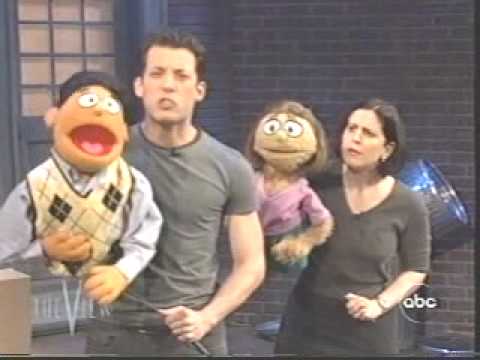
...I looked for "Everyone's a Little Bit Classist", but they wanted money for it. (as you might expect, they really like money)
-
Gentrifiers (white or black) have more economic power so I am less inclined to cut them slack if they display class based prejudice.
love the logic
-
There's always a bit of truth in comedy.
-
So true, nearnostrand.
While I admire and appreciate the efforts of those who work to eliminate the effects of racism and classism in our society, I often wonder if they have an understanding of "epistemology", "knowledge organization", and "reductionism" as these terms are used by folks in the fields of philosophy, sociology, psychology and library sciences.
When one understands these concepts, the challenge become even more complex:
The macro goal is not to have people actually get rid of their stereotypes and prejudice, but to have them examine and control them in a way that they do not inflict harm on themselves and others.
The expression "check yourself before your wreck yourself" comes to mind.
I can't imagine that the effects of "engaging in too much reductionism" are a lot different for someone based on their economic power, social class or skin color. As a result, I have a hard time cutting anyone slack.
-
Your flawed logic let me show you it. With my edits in italics to make it clearer.
I see an obvious issue with the second statement, but not the first, if it is changed to
"poor inner city people"black people. For the thousandth time, mostinner city peopleblack people are not bad people or criminals or whatever. But there is a correlation betweenpovertyblacks & crime, as well as between certain behaviors deemed as unacceptable outside theinner cityblack population that are associated with theinner city and the people from themthe blacks and their culture. In the case of the article about Detroit, said behaviors included the disrespecting of property, noise pollution, excessive trash, etc. etc... these were direct behaviors exhibited by theinner city folksblack folks in question. Not ALL theinner city folksblack folks, but by SOMEinner city folksblack folks(and NO"original " suburban folkswhite folks, as the behavior was not there beforeinner city folksblacks started moving in). If it were possible to separate the offenders from the majority of the new people who mind their business I'm sure the complaints would be more directed- but without keeping tabs on each and every new person it's impossible to make that distinction.This is why your privilege is called a blindspot. Its so normal and embedded you cant even imagine anything different. It doesnt make you a bad person if you have privilege (whether its white privilege, class, gender, hetero, religious,able-bodied etc etc) -what distinguishes you is how you use it. Do you use your privilege to excuse the systems, power structures and individuals within those systems that disenfranchise those without that privilege? Or are you going to use your privilege and be an ally of those being marginalized?
I havent been able to meaningfully determine what ways I can ally with those being squeezed out by gentrification (beyond the work I already do). Saying "oh well landlords will raise their rents its the American way" and "I have to take care of mine" doesnt help the situation. I had hoped for a conversation- given that in some ways I found some of my experiences echoed in the Washington DC piece. Clearly, the media narrative of gentrification affects the way in which people think there is a problem and secondly estimations of whether its solvable. This media narrative has also shaped the conversation here.
-
This is why your privilege is called a blindspot. Its so normal and embedded you cant even imagine anything different. It doesnt make you a bad person if you have privilege (whether its white privilege, class, gender, hetero, religious,able-bodied etc etc) -what distinguishes you is how you use it. Do you use your privilege to excuse the systems, power structures and individuals within those systems that disenfranchise those without that privilege? Or are you going to use your privilege and be an ally of those being marginalized?
some words that come to mind when i read this: pretentious, arrogant, know-it-all, douche.
it must feel good to think that you know so much about the world you live in. preach!
-
trumystic wrote: I had hoped for a conversation- given that in some ways I found some of my experiences echoed in the Washington DC piece.
trumystic-
I'm not going to call you names, or assume that you believe you know it all.However, I think most people on this thread have been having a very genuine conversation with you. ...but this conversation now seems to be going in a downward direction.
Can we stay at a level where we are using our intellect?
I'd love for you to respond to my post above:
whynot wrote: While I admire and appreciate the efforts of those who work to eliminate the effects of racism and classism in our society, I often wonder if they have an understanding of "epistemology", "knowledge organization", and "reductionism" as these terms are used by folks in the fields of philosophy, sociology, psychology and library sciences.
When one understands these concepts, the challenge become even more complex:
The macro goal is not to have people actually get rid of their stereotypes and prejudice, but to have them examine and control them in a way that they do not inflict harm on themselves and others.
The expression "check yourself before your wreck yourself" comes to mind.
I can't imagine that the effects of "engaging in too much reductionism" are a lot different for someone based on their economic power, social class or skin color. As a result, I have a hard time cutting anyone slack.
-
Trumystic said:
Your flawed logic let me show you it. With my edits in italics to make it clearer.I see an obvious issue with the second statement, but not the first, if it is changed to
"poor inner city people"black people. For the thousandth time, mostinner city peopleblack people are not bad people or criminals or whatever. But there is a correlation betweenpovertyblacks & crime, as well as between certain behaviors deemed as unacceptable outside theinner cityblack population that are associated with theinner city and the people from themthe blacks and their culture. In the case of the article about Detroit, said behaviors included the disrespecting of property, noise pollution, excessive trash, etc. etc... these were direct behaviors exhibited by theinner city folksblack folks in question. Not ALL theinner city folksblack folks, but by SOMEinner city folksblack folks(and NO"original " suburban folkswhite folks, as the behavior was not there beforeinner city folksblacks started moving in). If it were possible to separate the offenders from the majority of the new people who mind their business I'm sure the complaints would be more directed- but without keeping tabs on each and every new person it's impossible to make that distinction.This is why your privilege is called a blindspot. Its so normal and embedded you cant even imagine anything different. It doesnt make you a bad person if you have privilege (whether its white privilege, class, gender, hetero, religious,able-bodied etc etc) -what distinguishes you is how you use it. Do you use your privilege to excuse the systems, power structures and individuals within those systems that disenfranchise those without that privilege? Or are you going to use your privilege and be an ally of those being marginalized?
I'm just gonna take a step back here and ask what exactly you're trying to say here. What is my priviledge and how have I used it? And how is it a black/white issue when in the article a black police chief was complaining about other black people? It's an issue of socioeconomic background, not race. If you feel it is unfair to make sweeping statements about groups then say that. But again, I've been careful w/every statement I've made to be as clear as possible.
I havent been able to meaningfully determine what ways I can ally with those being squeezed out by gentrification (beyond the work I already do). Saying "oh well landlords will raise their rents its the American way" and "I have to take care of mine" doesnt help the situation.
Neither does marginalizing or putting words in the mouths of those in the conversation who don't necessarily share your views.
No, "clearly" other people see the issue of gentrification through other lenses than you do, and for whatever reason you cannot reconcile that simple concept. You continue to misread + take what people say out of context & be indignant when called on it. I've been here before, not eager to go down that road again... you're right, it's a matter of privilege, it's a conspiracy, anyone who doesn't fully support the displaced (not those who have been displaced and are moving into neighborhoods, the "real" displaced folks) is complicit... I'm done
I had hoped for a conversation- given that in some ways I found some of my experiences echoed in the Washington DC piece. Clearly, the media narrative of gentrification affects the way in which people think there is a problem and secondly estimations of whether its solvable. This media narrative has also shaped the conversation here.
-
Trumystic,
You seem have alienated both CTK and Mr. Met from your coalition to address racism and classism. In my view, that's unfortunate.... I have a sense didn't take the time or put in the effort to get to know them.
Are you sure this is a good medium?
Are you sure you are going about this task in an effective way in real life, and not perceived in a similar manner?
I look forward to you responding to my "epistemology", "knowledge organization", and "reductionism" post, as I am also considering writing you off.
-
My answer to Mr Met: thank you for telling me how you really feel.
-
I'm just gonna take a step back here and ask what exactly you're trying to say here. What is my priviledge and how have I used it? And how is it a black/white issue when in the article a black police chief was complaining about other black people? It's an issue of socioeconomic background, not race. If you feel it is unfair to make sweeping statements about groups then say that. But again, I've been careful w/every statement I've made to be as clear as possible.
Cool the Kid, I have repeatedly said its unfair to make sweeping generalizations. I have repeatedly said what I hear you saying and asked for clarification of what I understood. I am saying that it sounds to me like you are being an apologist for those who make statements like "I dont want to live near low income/inner city people". You very eloquently gave examples of how it would be reasonable for someone to be justified in making this statement. It's clear from all your posts that you would never make apologies for someone who would say "I dont want to live near black people". In my posts, I have been saying that this (referring to black on black
gentrification articles: DC, Atlanta articles) is about classism. You have said its about class too. We both agree its about class. But I am additionally asking you why you are making excuses for something you acknowledge in one situation is problematic (those who say "I dont want to live near blacks") and in other situation is a pretty logical conclusion given stats(those who say "I dont want live near inner city people")? What I did is take your words and then erasing the class related terms for ones linked to race. Why? To see if the argument or logical conclusion is still sound. If you think it is, then at least you are consistent.You have acknowledged that it is a subset of a subset of
poor inner city people that create the tension and that many react to negatively. But that stance makes a difference in terms of how you talk about gentrification. Someone who thinks that its all poor people who cause the problems is very different from someone who thinks its a minority of poor people causing the problem. The person who thinks all poor people are causing the problem ( lets call him Bloomer) might just say "Gentrifications good- lets clear the city of them". The person who says the minority of poor people causing the problem might feel (call her Flower) more ambivalent about the process and might be more open to dialogue. Flower might not be so apt to think gentrification is a totally positive and benign process. I can work with Flower but not with Bloomer. But I might be more conflicted with working with her if she made apologies for Bloomer's behavior and statements.Neither does marginalizing or putting words in the mouths of those in the conversation who don't necessarily share your views.
How did I put words in your mouth? How did I marginalize you? How have I been any more or less indignant than you?
Finally the privilege comment could have been re-written for clarity. I can rewrite if asked. Long story short: if you are a gentrifier then how do you use that privilege...
-
Trumystic, what about someone who has absolutely no objection to living with a large number of middle-class, college-educated black people as his neighbors, but who does not want to live anywhere near large numbers of unemployed, uneducated people, regardless of whether they be black or white?
Does that person offend you?
-
Booklaw, yes that person would morally offend me even though I would fall into the class of "acceptable" people. If the person said they did not want to live anywhere near large numbers of unemployed that might be less offensive. But I think that just because you are uneducated doesnt mean you will be a bad neighbor.
Is economic diversity of neighborhoods a good?
-
Trumystic-
How about you provide answers to the questions you have already been asked by me first?Then (those of us who are left on this thread....) will answer yours, and you can decide whether we adequately appreciate mixed income neighborhoods. We can talk all about Jane Jacobs, 80/20 housing, rent control, NYCHA, Mitchell Lama, work training programs, SSI/SSD, public assistance, Section 8, Working Families Party, FUREE, etc.
It'll be fun.
By doing it this way, it will be more of a conversation with you, and not a lecture from you.
It may even prevent readers from concluding that you have reached conclusions about "how we view others".
Remember, so far no one has disagreed with anything you have said regarding the negative effects of class and race prejudices.
We've just wondered how you have determined our logic is flawed, because -in our perception- you know very little about us.
-
Again here's my point
Someone who thinks that its all poor people who cause the problems is very different from someone who thinks its a minority of poor people causing the problem.
Obviously
But nobody here is in the first group
If those problematic individuals are always mixed in with groups of poor people, I don't see how it's unfair to avoid the whole group in order to not encounter those people who are usually mixed in with them. It's like if a warning goes out that some ground beef went out w/E coli... one could invest a ton of $$$ and effort to clean the meat or test + sort it out from the good meat, but as a consumer I would rather just avoid it unless I had no other choice.
The person who thinks all poor people are causing the problem ( lets call him Bloomer) might just say "Gentrifications good- lets clear the city of them". The person who says the minority of poor people causing the problem might feel (call her Flower) more ambivalent about the process and might be more open to dialogue. Flower might not be so apt to think gentrification is a totally positive and benign process. I can work with Flower but not with Bloomer. But I might be more conflicted with working with her if she made apologies for Bloomer's behavior and statements.
Again nobody here has said that neither explicitly nor implicitly so I don't even know why you feel this is a point that has to be madeI feel like I have said the same thing 10 times, I will say it again succinctly
Not wanting to live near inner cities or inner city people is not an indictment of all the people from the inner city, just the few responsible for the unique crime and quality of life issues within them
If you want to question the validity of such a generalization, fine, but there are plenty of statistics & anecdotes that show that people like the crackhead who stole my bike or the rowdy kids who threatened my girlfriend or the dude w/the loud car stereo who would park on our block at 11PM and shake our apartment for 30 mins are people that are unique to low income areas. I never saw any of these kinds of people in Greenpoint. I rarely saw these kinds of people just three blocks west. I didn't see these kinds of people when I lived in Astoria. But I did see these kinds of people when I did work down in the project in Coney Island. I did see these kinds of people when I was dating that girl in Southside Projects in Queens. I did see these kinds of people in Lefrak City. And there are stats out to back up my observations. So again those particular types of people are not representative of low income areas, but they are there and generally nowhere else. Why is that so difficult to understand?





Howdy, Stranger!
Categories
- 40K All Categories
- 27.1K Neighborhoods
- 5.1K Crown Heights/Prospect Lefferts Gardens
- 7.1K Prospect Heights
- 2.3K Fort Greene, Clinton Hill, Bed-Stuy
- 8K Park Slope
- 549 Williamsburg, Greenpoint, Bushwick
- 442 Flatbush/Midwood/Ditmas Park
- 657 BoCoCa (Boerum Hill, Cobble Hill, Carroll Gardens)
- 151 Red Hook
- 104 Gowanus
- 304 Bay Ridge/Bensonhurst
- 130 Coney Island, Brighton Beach, Sheepshead Bay
- 270 Brooklyn Heights, DUMBO and Downtown
- 598 Windsor Terrace / Kensington
- 673 Greenwood Heights and Sunset Park
- 749 Brooklyn and Beyond
- 6.3K Stuff
- 86 Brooklyn Back When
- 1.2K Brooklyn Pets
- 257 Brooklyn Kids
- 241 Brooklyn Eats
- 51 Brooklyn Booze
- 3.6K The Lounge / Random Stuff
- 611 Brooklyn Politics
- 122 Brooklyn Sports and Fitness
- 111 Brooklyn Photos
- 339 Site Issues
- 8 Frequently Asked Questions (FAQ)
- 6.2K Listings
- 1.1K APARTMENTS and REAL ESTATE
- 1.3K Sales Openings Events
- 2.3K The Classifieds