Confessions of a Black Gentrifier
Comments
-
Whynot,I havent insulted anyone or called them a racist or classist. I have tried to make a distinction between a classist assumptions which are different than classist statements which are different than classist reactions/behavior and classist people. Ditto for racism.
In terms of alienation its interesting that you say you care. I have been called a race-baiter, arrogant and some other negative terms on this thread (including by you)and it didnt come across to me that you cared about my alienation. But, I digress. I dont pretend that I know you CTK, Mr Met or that you know me from a message board. And I didnt think I had a coalition about anything with them because I was not sure whether we had any common ground. What am I doing? Just chatting on a message board. Sometimes people get to understand where someone else is coming from and sometimes they dont.
The macro goal is not to have people actually get rid of their stereotypes and prejudice, but to have them examine and control them in a way that they do not inflict harm on themselves and others.
The expression "check yourself before your wreck yourself" comes to mind.
I am only familiar with some of the terms you mentioned. Anyway, I think some people have a goal to rid all people of all of their stereotypes and prejudices. I am not sure that is possible. However I think it is possible to reduce prejudice and mitigate prejudice. However, I think the first step is seeing if the stereotypes/prejudices are present (diagnosis) and then secondly if they can be mitigated. To understand that you need to ask a person what they believe to be true or of value. Then you might point out if what they believe to be true might be considered a stereotype/prejudice ( plus they have to agree). Then you would have to ask this person about the ramifications of the stereotype/prejudice (negative or positive or neutral). Then you would have to ask the person if this stereotype or prejudice they would want to work on. Finally, would be a process of how to mitigate the -"isms" effect on their thoughts, words and behavior. Sometimes in the process and analysis (checking themselves as you say)the person will have less prejudice or at least help them not act in a way that furthers or reinforces that prejudice. Someone close to me calls this process examining your blindspots. Thats on the individual front but you could also conduct the same analysis of systems or policies.
So yes very complex and tiring. Because you need to circle back from values to actions and can lose someone along the way when the say "Fuck you,you filthy thought police, politically correct guilt ridden liberal" or what have you. And you would have to check for the intersection of multiple -isms too ( which someone recently coined a term "kyriarchy") which makes it even more complex. I "check myself" all the time which is how I have discovered some of my worst blindspots -which I have to actively work on all the time. Incidentally, most people usually cant see if they have made a wreck of themselves- it usually takes someone else to point it out to them.
And yes I think this process can be conducted on the internets and even fruitfully. As it can in person.
-
In my view, your attempts to conduct this discussion on the internet have failed miserably.
You have already offended several regular readers.
...I hope you take the time to read about the terms I discuss above. The terms have very specific meanings within the fields I mention.
The terms are used in antiracism and classism workshops such as this. Professional therapists and social workers discuss these issues a lot, and you could attend this workshop thru NASW to learn about the terms.
Google might do the trick, but the concepts are pretty complex. They are almost as complex as the manner in which people understand and reacted to concepts such as "race and class". I ask you to do this because, I think it is important that you understand how the mind organizes information, and most of the terms I use above pertain to that issue.
As you point out, if you do not understand what benefit people obtain from engaging in stereotypes, you will be unable to help them change their thought processes and actions.
trumystic wrote:
I didnt think I had a coalition about anything with them because I was not sure whether we had any common ground.How one goes about determining whether one has common ground with someone else is important. On this thread people seem to have perceived your method as being one which looks for things you DO NOT have in common, as opposed to things you DO have in common.
As a result, they perceive you as stating that you care about racism and classism, yet quickly concluding that they do not.
This is like going into a room and "looking for an enemy". ....whenever people do that, and they can't find one, they often end up with one anyway ....because they made one.
Most enemies are made, not found.
While I continue to believe you are attempting to exceed the abilities of this medium, if you are going to talk about issues of this intensity here, you should assume the reader mostly agrees with you and is as thoughtful about race and class as you are.
You should be ready for people to misunderstand you, in the same way that you have repeatedly misunderstood them.
-
Trumystic, you've convinced me. So long as I get to choose which uneducated or unemployed folks (without regard to color) are to be allowed to move onto my block, after carefully vetting their personal histories, behavior and values, I will not worry about their presence or seek to exclude them.
-
For what it's worth, I would hope to exercise the same privilege to exclude rich white bankers and other country-club types. Economic diversity has its limits, after all!
-
Anyway, I think some people have a goal to rid all people of all of their stereotypes and prejudices.
Is this a conclusion you've made about anyone here based on what anyone has posted? How does wanting to avoid groups that have been shown to contain elements that are dangerous equate to wanting to get rid of them? This is what I meant by putting words in people's mouths, albeit in a roundabout way
And I think it's pretty easy to come up with instances or scenarios in which stereotyping is appropriate; to suggest that no such scenarios exist is to suggest that people are wrong to use prior experiences to make judgment calls on how to proceed in an impending but familiar situation... its like forced amnesia
Of course, danger lies in the creation + usage of stereotypes to disenfranchise or harm someone (i.e. the growing # of attacks on people assumed to be of Muslim descent since 9/11, the blocking of mosques etc), but IMO there's no harm/foul in saying "there is high crime in the inner city, I do not want to live there" or having experienced a change in the worse for one's neighborhood due to inner city folks moving in and saying "since these inner city folks have moved in the quality of life has gone down dramatically, i do not want to live around them"
Its no different from not wanting to live around young party people or whatever, certain demographics just have higher incidences of certain behaviors. And it's not the same as to say "i do not want to live around black people" because, TBH, black people are a more diverse group than inner city people. The quality of life issues are way more prevalent + common in poor areas than in "black" areas, the primarily black middle class suburbs in the south are proof of this.
-
8/10/2010
Separate is never equal:
Rice Professor: Damage from segregation rises with each generation
(excerpted)
...Emerson, the Allyn and Gladys Cline Professor of Sociology and co-director of the university's new Institute for Urban Research (IUR), gave a brief summary of segregation in Houston based on the 2000 Census that showed distinct separation between black and white neighborhoods, with Hispanics somewhat more integrated but still dominating many neighborhoods of their own.
"People make their own decisions, their own incomes, and they're all trying to get the best house and neighborhood they can get. How does it end up they live so segregated by race?" he asked.
Emerson said he hears two common answers. The first: "It's not race; it's class.
"In fact, that's not the answer," he said. "There is a range of incomes within any racial group, and when we look at where people live by income level, (they're) still segregated by race. Segregation by race is substantially greater than segregation by income."
The second answer -- "People like to live with people like themselves" -- is somewhat more accurate, he said, but still not the answer. “What we have found is that in current times, many people want not to live with certain people -- people they think will drive down their property values, raise crime and lower the quality of local education. They use race to decide these other factors."
Emerson's own neighborhood is a good example of what has befallen not only Houston but also major cities nationwide. "When I moved there, it was mixed with many racial groups, but now it's 99 percent black and Hispanic," said the professor, who is white. He noted that in 21st-century America, he's "totally convinced we have to live in integrated neighborhoods, so my family and I choose to do so."
Too few are so committed to diversity, according to the most recent Houston Area Survey.
A "factorial experiment" of African-Americans, Hispanics and whites, 1,000 each, revealed important results. Individuals were first asked if they'd buy a house that had everything they were looking for, was close to work and within their price range.
"Everybody hears that," Emerson said. "Then there was a part that was computer-generated (with parameters that changed for each phone call): Checking on the neighborhood, you find the property values are increasing/decreasing, the crime rate is high/low, the schools are of high/low quality, and the neighborhood is X percent respondent’s own race and X-to-100 percent of another racial group.
"This is a lot to remember," he said. "That's exactly what we want, because we're looking to see what people key on. For example, if I hear 'crime rate is increasing,' that's what I'll remember, and I probably won't buy that home."
Emerson said the results showed, as expected, sensitivity among all groups to high crime rates and low-quality schools. Blacks and whites were more sensitive to home valuation than Hispanics.
"Are there still racial-composition effects? If what people tell us is true, they should go away," he said. Race is indeed less of an issue for Hispanics, at least in Harris County. But for whites, "you get a different story. They are highly sensitive to percent black and percent Hispanic.
"Even if you take a neighborhood that has low crime, high-quality schools and rising property values and you say it's 30 percent black, in almost every single case, the white respondent will say, 'Not likely to buy the home.'"
And the more educated whites are, the more likely they are to live in highly segregated neighborhoods, he said. “Again, this is not an income effect; it’s an education effect.
"What we find is that we can have diverse neighborhoods; we just can't have whites in those diverse neighborhoods for very long because of their racial preferences."
...
http://www.media.rice.edu/media/NewsBot.asp?MODE=VIEW&ID=14607
BY MIKE WILLIAMS
Rice News staff...
-
I am with you Krowonhill!
http://brooklynian.com/forum/brooklyn-politics/american-society-the-poor-the-unemployed/page/9
Um, how the hell do we get to a better place?
How do we implement Brown v Board of Education?
....what the hell do we do until then?
-
Black On Black Gentrification - personally speaking, I hate the idea of my economic presence pushing-forcing anyone out because I can afford the market rate, more than they pay etc.
But, when the community is of African descent (black), it has an extra sting of a cumulated effects of long, historic pattern of systematic injustice in Afro- Americans attempted home ownership and being systematically denied loans - when qualified - racial convents in leases not to sell to blacks etc
In all honesty, this is the first community where I'm a "Gentrifier" of sorts. The E Vilage & Park Slope had long been gentrified when I moved in.
Black on Black gentrification is a highly nuanced subject, especially in NYC.
But personally, I try to "fit in". Engage and truly try to know and understand this particular community. I don't want to live near crime, gun violence, drug activity and ignorant people of any race or class.
Unfortunately, there is a major class divide in CH regardingvtge new arrivals and sone of the long yoners, mainly the rent controlled or Section 8 receptiants, and quite frankly I try not to call attention on what side of the line I fall on.
I also notice a large group of mainly Midfle-age, Midfle class, people of African descent, home owners who do not seem to be recognized in these discussions of gentrification. As they seem not to fit the "cultural type" of what some of the newcomers recognize as symbols of middle-classiness.
Personal, I feel Criwn Heights is on the road to gentrification.,, BUT if you're renting with a roomaye or two to pay the rent, you may pay more than your "long time" neighbor.., but don't kid yourself.., you are more like the constructionworkers in my mind.
Tearing up or changing the old, to prepare for the new or true gentry. The home, condo or co-op buyers making very comfortable high 5 figures, but more than likely 6 figure salaries.
Right now, in Crown Heights, more white kids may be moving in, in higher numbers than before renting at higher prices than before.., but are they the Gentry? In my personal opinion no.
They are the transitional kids who will help transform the social-racial- and somewhat economic demographic to make the true Gentry, deep pocketed professionals, feel comfortable crossing Flatbush ave, least more Washington, Franklin or Nostrand.
So, unless you own, or are making plans to own in the next 3 -5 yrs.., be prepared to be exploring East New York soon and starting all over again.
They vulnerable, low capital individuals are the first to be screwed. It may be the long term renter today, but tomorrow when a population of young, single professionals - making a confutable very high 5 figure salary at the lowest - and medium salary in the 6 figures discovers Crown Heights - then truly say hello to the Gentry as you are being priced- forced-pushed out.
BottOn Line - O personally take no pleasure in pushing any hard working, law abiding person or famy out because I earn more -and it does sting just a bit more when they look like me and/ or my relatives - but lack the education, resources and social networking skills I posses.
-
"Even if you take a neighborhood that has low crime, high-quality schools and rising property values and you say it's 30 percent black, in almost every single case, the white respondent will say, 'Not likely to buy the home.'"
And the more educated whites are, the more likely they are to live in highly segregated neighborhoods, he said. “Again, this is not an income effect; it’s an education effect.
"What we find is that we can have diverse neighborhoods; we just can't have whites in those diverse neighborhoods for very long because of their racial preferences."
yup, it all comes down to white people being racist.
simple, clean, and convenient.
-
Snowboard Q-
Good post.When a neighborhood changes, a lot of the research says that those who are most likely to be priced out of a neighborhood are folks who were barely able to afford it before the change. Basically, unlike higher income groups, they have no cushion of discretionary funds to allocate toward more rent.
As you stated, this is partly due to government programs (such as Sect 8, rent stabilization, etc) that effectively protect long term residents lucky enough to receive them.
I also agree with your assertion that those displaced are often replaced by those who earn only slightly more than them.
Capt Planet and I discussed a group of folks that we feel are particularly susceptible here:
http://www.brooklynian.com/forums/topic/housing-abandonment-and-homeless#post-728051
The problems arises in that not everyone is in favor of increased protections for tenants.
For example, people who own rental properties would like to get the most money for their properties and be free from government restrictions.
For example, taxpayers and politicians are weary of promising protections and assistance that will be expensive or tedious to implement and enforce.
We also live in a city that tries to merely balance the pace of change, as opposed to actually preventing change. We also live in a neighborhood that has had a huge boom in housing construction and refurbishing of long vacant properties ....which is to say, not all of the new faces in the neighborhood are the result of old faces being displaced.
As a result of the competing forces in the housing market, I can't say I think we ended up in this situation as a result of anyone's (political party, rental tenants, mayor, REBNY, HUD, landlord, potential homeowners, homebuilders, etc.) actual design and strength.
The forces are just too complex and strong to point a finger and say ....you are too blame!
In fact, I have concluded that NO ONE would design our present system, because it is not logical in so many ways.
...the "system" stems from an ongoing evolution of ever changing regulations, preferences (which includes ones based on race), and incomes.
As a result of this ongoing evolution, no one interest or set of people has control over it.
But, yup, those with money, education and connections always have more control over their lives than those without. I can't imagine ever changing that fact, and you are wise to be aware that someday you too may be priced out. (as may I)
Due to the factors I have listed, I do not think I will ever get to see what it look like to live in a place that went to the extent that it attempted to prohibit neighborhood changes that arose from market forces.
Nor am I certain that I would want to live in such a place.
-
Too few are so committed to diversity, according to the most recent Houston Area Survey.
Lol, I was unaware that diversity was a goal. Like the billions of people before and with us, I prefer to live around people like me, and have no problem saying it, whether it involves me saying 'i would prefer to live around more black professionals' or 'i would prefer not to live around white construction workers'
I'm sure those who took the opposite statements like a blow to the gut could 'totally understand' black people either wanting to live around other black people, or not wanting to live around non-blacks
I'm confused
-
There is this whole back and forth because we all have different set points for what is ok or good. Personally I think its a question of values- which are often revealed in the questions we ask as well as how we answer them.
You can begin to get a sense of what I think is important by my questions. The ones I asked as well as the ones I didnt.
1. Is economic diversity good?
2. Is racial diversity good
3. Do I want to live in a racially and economically diverse neighborhood?
4. Is gentrification a problem?
5. Is gentrification a problem if it displaces low income folk from that neighborhood?
6. Is gentrification a problem if it displaces working class folk from that neighborhood?
7. Is gentrification a problem if it displaces middle class folk from that neighborhood?
8.Is gentrification a problem if it displace me?
9. Is gentrification that displaces people inevitable?You can also get a sense of where I am coming from by my answers:
1. Is economic diversity good? YES
2. Is racial diversity good? YES
3. Do I want to live in a racially and economically diverse neighborhood? YES
4. Is gentrification a problem? MAYBE. It doesnt have to be a problem if it results in economically and racially diverse neighborhoods. And no I dont have a magic formula
5. Is gentrification a problem if it displaces low income folk from that neighborhood? HELL YEAH
6. Is gentrification a problem if it displaces working class folk from that neighborhood? HELL YEAH
7. Is gentrification a problem if it displaces middle class folk from that neighborhood? YES
8.Is gentrification a problem if it displace me? MAYBE, if it's just me it might be ok since I have choices. But if its happening to a lot of people then YES (see answer 5-7 above)
9. Is gentrification that displaces people inevitable? I dont think so-otherwise I wouldnt be having this conversationSo there you have it. You have a general gist of where I am coming from and what I think is important.
-
Snowboard queen, interesting point about waves of people moving in that foretell the "real gentry" coming in. I guess however way you define it I am pretty ambivalent about being gentrifier-for-now. You defined the pre-gentrifiers pretty clearly. So how do you tell when the gentry are moving in? People make jokes about it being a neighborhood blog, a Starbucks or big name real estate company opening an office. What's the tipping point in your mind that tells you the real gentry is coming?
-
The easiest way may be to see whether the cars parked on the block are still beat-up heaps, or whether the proportion of new Toyotas and Hondas is increasing. Once you see a significant number of BMWs (ones without spinner rims and blackout glass), Audis and Land Rovers, it's too late... The nabe is gentrified.
-
booklaw said:
The easiest way may be to see whether the cars parked on the block are still beat-up heaps, or whether the proportion of new Toyotas and Hondas is increasing.Then comes someone ahead of me in line at the supermarket stating to the cashier that they should carry better vegetables, and me thinking to myself "yes, I have an ally!"
-
That's probably another reliable sign of regime change.
-
What's an example of an economically diverse neighborhood in NYC, or America?
-
Actually I think NYC probably has more economic diversity within neighborhoods than most places. Granted there is still extreme geographic segregation by class even in diverse neighborhoods, but look at neighborhoods like Ft Greene that has very well off professionals, long-time middle class homeowners, lower income folks in housing projects and no income college students.
-
whynot_31 said:
So true, nearnostrand.While I admire and appreciate the efforts of those who work to eliminate the effects of racism and classism in our society, I often wonder if they have an understanding of "epistemology", "knowledge organization", and "reductionism" as these terms are used by folks in the fields of philosophy, sociology, psychology and library sciences.
...
I can't imagine that the effects of "engaging in too much reductionism" are a lot different for someone based on their economic power, social class or skin color. As a result, I have a hard time cutting anyone slack.
Bravo; very well stated!
-
If your taste in reading includes the academic, there's a case study of this matter (apologies if this has been referenced earlier in the thread).
Mary Pattillo, Black on the Block (2007).
-
If you want to look up how diverse neighborhoods are, go to the NY Times site, click on the map on ethnic diversity, click on NY state and then blow it up to see NYC.
http://projects.nytimes.com/census/2010/map
What you will find is that there are some diverse neighborhoods in Queens mostly along the #7 Line and between the LIE and Jamaica Avenue to the east of the Van Wyck. Brooklyn is pretty racially segregated with mostly white neighborhoods to the west of Flatbush and mostly black neighborhoods to the east.
Crown Heights looks more diverse than many Brooklyn neighborhoods - not because of the new people moving in from the west but because of the Hasidic population smack in the middle of the neighborhood.
That brings me to the question of what we mean by neighborhood diversity? Is living near someone not like ourselves sufficient? Do we mean actually talking to neighbors who are not like us? Eating in their restaurants? Having them eat in ours? Having our kids play in playgrounds together? Go to school together? Going to each others' apartments for dinner?
Also, we should never confuse change with gentrification. The Lower East Side from 1830 to 1980 was a succession of poor immigrant/migrant peoples who replaced each other without ever managing gentrification. Lots of change or little change depending on if you were talking about race or economics.
Snowboard Queen may be right when she says that people living together because they can't make the rent are the harbingers of gentrifiers to come. However, they may be indicators of things going in the opposite direction too. Unless those young people start earning more money - and I don't see that happening except for the very wealthiest groups in our society - there won't be a real chance that they will get out of the group housing situation. And if things go in that direction, then young people living together looks more like a downturn from an economic perspective than a gentrification.
-
Wow, that's a lot to ingest. Speaking of ingesting I am about to get some baguette bread, blue cheese, and some olive oil -- three things I could not get around the corner last year this time. And oh, it's nearly 1am in the morning... As I make the walk, I will be wary of the brothas up to no good, the white girls who give me cautious glances, and the white dudes with fixed closed faces as I walk by...
Gentrification brings with it access to better goods and services. It's a crest of betterment that if you can afford it, it's a wonderful thing. If you can't then it sucks like crazy. I am riding the wave as best I can.
Here is another article that refers to the issues of gentrification, and being a person of color:
http://query.nytimes.com/gst/fullpage.html?res=9904E0DC113DF933A15751C0A9679D8B63
-
the white dudes with fixed closed faces
haha
-
MHA said:
Wow, that's a lot to ingest. Speaking of ingesting I am about to get some baguette bread, blue cheese, and some olive oil -- three things I could not get around the corner last year this time. And oh, it's nearly 1am in the morning... As I make the walk, I will be wary of the brothas up to no good, the white girls who give me cautious glances, and the white dudes with fixed closed faces as I walk by...Gentrification brings with it access to better goods and services. It's a crest of betterment that if you can afford it, it's a wonderful thing. If you can't then it sucks like crazy. I am riding the wave as best I can.
Here is another article that refers to the issues of gentrification, and being a person of color:
http://query.nytimes.com/gst/fullpage.html?res=9904E0DC113DF933A15751C0A9679D8B63
Interesting article. The city is always changing now. I get scoffed at by young people for having moved to Manhattan

But various parts of the city have gone through radical changes. I know old white dudes from ENY... ENY! They sometimes mention in passing how different the neighborhood was.
-
So, we seem to all agree that adapting to a changing neighborhood is VERY hard, and harder on some people than others.
Although I'm not a fan of Brady Bunch, does this song help with the transition?
Time For Change

How about this one by the Jackson Five?
It's too late to change the time
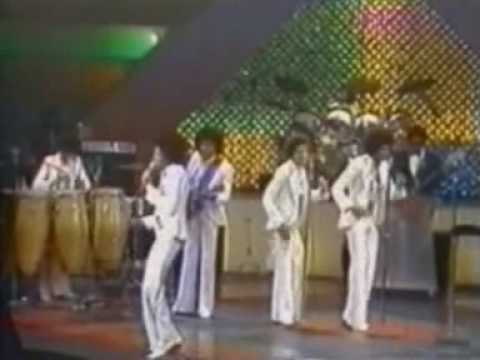
For best results, make sure to closely listen to the words of each!
-
How does one balance the combined wisdom of
The Jackson Five and the Brady Bunch
against
the wisdom of Public Enemy?
Gasp, can both perspectives be right?
-
Maybe this is part of the answer....

Note: The links in the above don't work. Folks will need to cut and paste.
-
Trumystic said:
Snowboard queen, interesting point about waves of people moving in that foretell the "real gentry" coming in...You defined the pre-gentrifiers pretty clearly. So how do you tell when the gentry are moving in? People make jokes about it being a neighborhood blog, a Starbucks or big name real estate company opening an office. What's the tipping point in your mind that tells you the real gentry is coming?
Tipping Points:[u]
When I park and retrieve my motorcycle from the garage, there are many nice, under stated expensive cars, and I'm not the only one tipping the attendants.
Being invited to the Harvard Club - by a few neighbors - to discuss a fabulous idea they have for a documentary.
Being invited to my new neighbors - lil' cottage - ie huge mansion/summer house in the Hamptons.
The "Hipsters" quickly disappearing and being replaced by the Upper East side casuals with bank accounts and/or family funds to match.
Asking if I can recommend where "qualified" help to clean their homes, take their clothes to the cleaners etc.
When apt rentals become condos and are brought 2 to 3 at a time - by 1 person - to make 1 lovely apt.
When lovely brownstones are brought, quickly gutted, either rehabilitated or completely modernized as the new owners comfortable rent, lease live elsewhere.
Starbucks - why would it exist? When your sweet domestic help can be trained to make a mean cappuccino in your coffee bar off the side of your renovated kitchen.
And finally, when the sweet, young kids living 2 or more to an apt., start bombarding the boards with how they are being priced and/or forced out by their greedy landlords to rent to a single person who can afford to rent at twice the rate all the roommates combined were paying. And they are now being forced to consider housing East of Utica.
This is just the being as Franklin Ave and Nostrand ave will be completely unrecognizable AND there will be a rumors that West Indians and people of African descent used to live in Crown Heights - just as in Park slope.
-
"What's an example of an economically diverse neighborhood in NYC, or America?"
You just have to cross Empire Blvd. into the other neighborhood that's [slightly] represented on this list :-)



Howdy, Stranger!
Categories
- 40K All Categories
- 27.1K Neighborhoods
- 5.1K Crown Heights/Prospect Lefferts Gardens
- 7.1K Prospect Heights
- 2.3K Fort Greene, Clinton Hill, Bed-Stuy
- 8K Park Slope
- 549 Williamsburg, Greenpoint, Bushwick
- 442 Flatbush/Midwood/Ditmas Park
- 657 BoCoCa (Boerum Hill, Cobble Hill, Carroll Gardens)
- 151 Red Hook
- 104 Gowanus
- 304 Bay Ridge/Bensonhurst
- 130 Coney Island, Brighton Beach, Sheepshead Bay
- 270 Brooklyn Heights, DUMBO and Downtown
- 598 Windsor Terrace / Kensington
- 673 Greenwood Heights and Sunset Park
- 749 Brooklyn and Beyond
- 6.3K Stuff
- 86 Brooklyn Back When
- 1.2K Brooklyn Pets
- 257 Brooklyn Kids
- 241 Brooklyn Eats
- 51 Brooklyn Booze
- 3.6K The Lounge / Random Stuff
- 611 Brooklyn Politics
- 122 Brooklyn Sports and Fitness
- 111 Brooklyn Photos
- 339 Site Issues
- 8 Frequently Asked Questions (FAQ)
- 6.2K Listings
- 1.1K APARTMENTS and REAL ESTATE
- 1.3K Sales Openings Events
- 2.3K The Classifieds