Intro to permaculture at Launchpad

What do Bill McKibben, Daniel Quinn and Peak Oil have in common? If these names are new to you, or if they're not, it's time we started connecting the dots so we can survive as a species into the next century. Come find out how before it's too late at this free public talk. Questioning encouraged!
Greg Todd is a member of Green Phoenix Permaculture. He took his 72 hour permaculture design course from Geoff Lawton and facilitates the Imani Commuity Garden in Crown Heights.
Comments
-
The talk is on Saturday Jan. 29th 2 - 5 PM. Launchpad is on Franklin Ave bet. Park Place and Sterling Place. The talk will be given by Greg Todd.
-
This lecture is Sat. 2 PM at Launchpad, 721 Franklin Avenue.
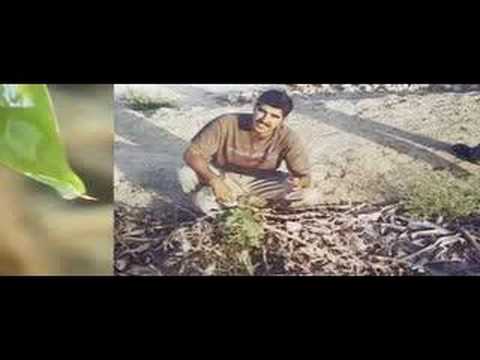
Here's an interesting video that captures some of the genius and energy behind permaculture.
-
Hey, it's tomorrow already. Have you RSVPed? It could be s sell-out (no pun intended) :scratch:
Sat. Jan. 29th 2 PM Launchpad 721 Franklin Avenue bet. Park and Sterling.
Here's a link to an article about the talk in the Prospect Heights Patch.
To RSVP, go to:
http://www.nycpermaculture.info/events/15922778/?eventId=15922778&action=detail
See ya'.
-
When Wed, February 16, 7pm – 10pm
Where 721 Franklin Avenue, Brooklyn, NY 11238 (LaunchPad)
Description What do Bill McKibben, Daniel Quinn and Peak Oil all have in common? If these names are new to you, or if they're not, it's time we started connecting the dots so we can survive as a species into the next century. Come find out how before it's too late at this free public talk. Questioning encouraged!
Greg Todd is a member of Green Phoenix Permaculture. He took his 72 hour permaculture design course from Geoff Lawton and facilitates the Imani Commuity Garden in Crown Heights.
Read more about it: http://prospectheights.patch.com/articles/how-permaculture-worms-in-your-kitchen-and-a-crown-heights-chicken-coop-can-save-the-world
-
So you think we can just continue spending and consuming as if there were no tomorrow?
Well, according to today's NY Times, tomorrow may be today.
http://www.nytimes.com/2011/02/15/business/15prices.html?_r=1&hp
When was the last time you saw prices going up in a recession.
Clearly we need a Plan B. Some call it permaculture. Find out more at a free introductory lecture tomorrow at Launchpad.
Wed, February 16, 7pm – 10pm
721 Franklin Avenue, Brooklyn, NY 11238 (LaunchPad)
What do Bill McKibben, Daniel Quinn and Hydro Fracking all have in common? If these names are new to you, or if they're not, it's time we started connecting the dots so we can survive as a species into the next century. Come find out how before it's too late at this free public talk. Questioning encouraged!
Greg Todd is a member of Green Phoenix Permaculture. He took his 72 hour permaculture design course from Geoff Lawton and facilitates the Imani Commuity Garden in Crown Heights.
Read more about it: http://prospectheights.patch.com/articles/how-permaculture-worms-in-your-kitchen-and-a-crown-heights-chicken-coop-can-save-the-world
-
Or if you prefer Paul Krugman, check these out:
http://www.nytimes.com/2011/02/14/opinion/14krugman.html?src=me&ref=general
http://www.nytimes.com/2011/02/07/opinion/07krugman.html?scp=2&sq=food prices&st=Search
-
Have you been reading about the record flooding of the Mississippi? In case you missed it, the water level at Cairo Illinois in early May went above the previous record, set in 1937, by TWO FEET.
Several years ago famed permaculturist Geoff Lawton was invited by the Army Corp of Engineers to suggest what could be done to prevent flooding in New Orleans. His response "You know mates, the problem isn't here, it's up in Minnesota, Illinois and Missouri. You got to slow the water down up there. That's where the problem is."
Needless to say, the Corp of Engineers thought he was crackpot. Read more about the permaculture solution to floding at:http://permaculture.org.au/2011/05/12/earthworks-course-zaytuna-farm-the-channon-may-2011/
Given continued flooding of the Mississippi and the Corp of Engineers abysmal record of flood control, Geoff may soon get another shot.
If you'd like to find out more about permaculture, attend a free introduction to permaculture lecture this Saturday May 14th at 3 PM at the Brooklyn Launchpad, 721 Franklin Avenue.
The class will be taught by Greg Todd Greg is a member of Green Phoenix Permaculture. He took his 72 hour permaculture design course from Geoff Lawton and facilitates the Imani Commuity Garden in Crown Heights -
Capt. Planet said:
Have you been reading about the record flooding of the Mississippi?For more perspective, this links to a set of maps showing the path of the Mississippi River over geologic time, using soil samples for data. Not only are these maps beautiful, they also make me wonder why *anyone* would be surprised that the river is not in the same place it was before. Expecting the ACE to hold back that river is a pipe dream. BTW Memphis is on the left bank about half way down the fifth map.
http://www.radicalcartography.net/?fisk -
Permaculture is an attempt to study nature and use it as an ally, rather than fight it as an enemy or just ignore it. Clearly human civilization, especially since the arrival of Europeans on our North American shores, has attempted to "tame" nature but never took the time to understand it. Hence the mess on the Mississippi.
The sense of permaculture is that we can live with the Mississippi and not have to move St. Louis every 200 years to accomodate the rivers natural flucuations. Rather we can understand how wetlands act as "shock absorbers", allowing the river to expand and contract without disastrous flooding. When we destroyed our wetlands and "reclaimed" them as farmlands, we took away the river's ability to regulate itself. In place of wetlands, we built dikes and levies to wall the river in. Our arrogance and ignorance of how water systems work doomed the effort to failure, which we are just now beginning to realize. The intense precipitation events brought on by global warming only excacerbate the problem. -
Isn't the basin around Memphis almost flat?
Hasn't the river wandered and flooded for millions of years?
I'm sure the factors you list have something to do with it, but I suspect you may be attributing to much blame to modern man.
I also have a hardtime believing we are going to let plains return to being a wilderness anytime soon.
-
Dear me, we need to talk.
The huge dead zone that exists for some 5-7,000 square miles out into the Gulf of Mexico at the mouth of the Mississippi is 100% man-made. Millions of tons of nitrogen and phosphorus fertilizer used by farmers upriver have made this the largest deadzone in the world due to a lack of oxygen in the water. The oxygen is consumed by micro-organims eating the fertilizer.
For more information, see:
http://serc.carleton.edu/microbelife/topics/deadzone/
An even bigger disaster is that the mainstream media completely ignores the situation, hence the general lack of knowledge about its existence. Certainly a reason for the media black out is the billions of dollars that are made by the likes of Monsanto, Bayer, Dow, Dupont and other companies selling chemicals to farmers.
Returning to Plains to prairie? Not right away, though Wes Jackson has been doing some interesting experiments with perenial grains. Perennial grasses hold the soil far better than the annuals that we now use and support a far richer soil biology, thus requiring much less fertilizer. See
http://www.landinstitute.org/vnews/display.v/ART/2007/03/15/45facffb6ccd6
More realizable in the near term, is paying farming to not grow in marginal lands, land that could better serve as wetlands. Wetlands can absorb millions of gallons of run-off during a rain event that would otherwise end up in the river. Of course since Earl Butz was Secretary of Agriculture under Richard Nixon, official USDA policy has been to back away from the land banking strategies begun back in the Great Depression.
Maybe we need another Depression to remember what we used to know!
-
Sorry Whyfi. I see now your reference was to the Memphis basin, not the Mississippi delta.
Nonetheless, a key principle in permaculture is slowing down the run off of water at the source through the use of swales and ditches, as is graphically illustrated in the video about greening the desert provided above.
To get the full picture, I'd recommend attending the talk on Saturday at 3 PM at the Launchpad. -
You are lecturing the wrong avatar!
Let's review
Whyfi:
(lately, he seems to enjoy taking lovely pictures of the botanical garden)whynot:

(was in the botanical garden once, but would still like the earth to survive for at least a little while longer)I'm well aware of the damage of fertilizer to the river basin and all forms of life. But, I was making sure you were aware that attributing the recent river flooding to man was kinda silly.
-
Not at all Why Not.
Thanks. -
Actually we've destroyed 50% of the wetlands that were in North America when Europeans arrived here. The result is that rainwater has a lot fewer swamps and marshes to hang around in before it ends up in the Mississippi and other rivers. A common permaculture technique is using swales and ditches to create more wetlands. These wetlands act like shock absorbers, buffering the effect of heavy rains on the watershed.
Of course we destroyed the wetlands to make more farmland. Again short term, short sighted thinking, not understanding or really even caring about the bigger implications. As the saying goes, pay me now or pay me later. Well I guess now is later, and our grandkids are going to think we were just a bunch of morons.
If there are any left to think anything. -
I have an easier time being depressed when wetlands are turned into a golf course, than I do when we turn them into farmland.
...but I don't think anyone will dispute your assertion we are morons.


Howdy, Stranger!
Categories
- 40K All Categories
- 27.1K Neighborhoods
- 5.1K Crown Heights/Prospect Lefferts Gardens
- 7.1K Prospect Heights
- 2.3K Fort Greene, Clinton Hill, Bed-Stuy
- 8K Park Slope
- 549 Williamsburg, Greenpoint, Bushwick
- 442 Flatbush/Midwood/Ditmas Park
- 657 BoCoCa (Boerum Hill, Cobble Hill, Carroll Gardens)
- 151 Red Hook
- 104 Gowanus
- 304 Bay Ridge/Bensonhurst
- 130 Coney Island, Brighton Beach, Sheepshead Bay
- 270 Brooklyn Heights, DUMBO and Downtown
- 598 Windsor Terrace / Kensington
- 673 Greenwood Heights and Sunset Park
- 749 Brooklyn and Beyond
- 6.3K Stuff
- 86 Brooklyn Back When
- 1.2K Brooklyn Pets
- 257 Brooklyn Kids
- 241 Brooklyn Eats
- 51 Brooklyn Booze
- 3.6K The Lounge / Random Stuff
- 611 Brooklyn Politics
- 122 Brooklyn Sports and Fitness
- 111 Brooklyn Photos
- 339 Site Issues
- 8 Frequently Asked Questions (FAQ)
- 6.2K Listings
- 1.1K APARTMENTS and REAL ESTATE
- 1.3K Sales Openings Events
- 2.3K The Classifieds