Wealth gap
Comments
-
Warehouse jobs frequently require that you are able to operate a fork lift and not have a criminal record.
Hence, the employer can only hire a subset of those looking for work.
-
I've seen some local jobs that just want the applicant to be able to lift 50 lbs. repetitively. No fork lift involved. And they were willing to pay that money but then they're paying that to overcome the tedium.
-
Yes, the better your friends, family, education, work ethic, physical health, behaviors, and positive outlook, the more money you tend to make.
-
I'm speaking in generalities.
I tend to think of him as a 1%.
-
For a nation that calls itself "Christian" there's no excuse for such a wealth gap. There's a certain legend about a camel having an easier time fitting thru the eye of a needle as opposed to the wealthy entering the Kingdom above. Defo a tale that is rather inconvenient for the elites.
-
Stacey says,
''That's why I don't understand how so many people can be anti-union. ''
The Koch brothers have paid a great many people to make online posts which pretend that unions are the antichrist. But history clearly shows unions expanded the middle class and made America great.
-
PragmaticGuy said:
Enforcement of minimum wage is quite a high priority I would think. Of course if it's hidden it's tough for the feds or the state to know but once it comes out the fines and penalties are huge. Jail time may also be involved. As for setting a minimum wage...well, that's something different.I have concluded it is NOT a high priority. Today's NYT, further affirmed my viewpoint:
-
Here's a short film which focuses on the nation, as opposed to the "world":
http://www.utrend.tv/v/9-out-of-10-americans-are-completely-wrong-about-this-mind-blowing-fact/While the film focuses on how lopsided wealth is redistributed vs. how people imagine it to be, I can't help but think that most people don't even have an understanding of how much total wealth there is to be "discussed".
Many also seem to imagine that wealth redistribution would be easy; That somehow we could just elect different leaders, tweak the tax code and somehow achieve meaningful (equitable?) change.
I am less optimistic.
In the United States, wealth is closely correlated to many things: race, education, gender, etc, and we would have to somehow overcome these factors to make meaningful changes that would not be temporary in nature.
Here's a very local discussion on the impact:
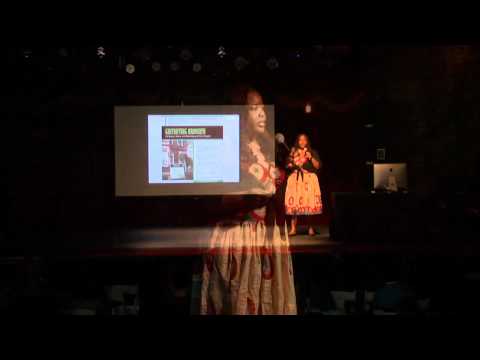
As well as a summary of the book she references: http://www.coas.howard.edu/centeronraceandwealth/reports&publications/review-of-oliver&shaprio.pdf
-
How the Super-Rich Are Abandoning America
https://www.commondreams.org/view/2013/11/04-1
As they accumulate more and more wealth, the very rich have less need for society. At the same time, they've convinced themselves that they made it on their own, and that contributing to societal needs is unfair to them. There is ample evidence that this small group of takers is giving up on the country that made it possible for them to build huge fortunes.
... more ...
-
We like to think of the wealthy (and the poor, and the middle class) as being part of the overall society.
As I left my 20s, I was longer able perceive this in the same way as I once did.
I now perceive the parts as having very little interaction, as being able to exist without interdependence on the other classes.
The classes are distinct. They are their own societies.
They need each other largely in the writings of deceased sociologists and economists, far more than they do in actual life in the U.S.
In this way, many of the wealthy are not a part of this country. They never have been.
In this way, the poor are not either. They never have been.
-
This thread is comical in that many of the same people who are worried about the poor are also the ones that can't wait for the neighborhood to be gentrified so they can live the lifestyle they want, the poor be damned. And they're only worried about the rents they can afford to pay even if they're much higher than what they previously were. Who cares if the people who lived there before had to move. Many of the people on here are as much a part of the problem though they refuse to think they are.
-
can't wait for the neighborhood to be gentrified
Can you point to any specific people and the words they used so that they may be properly challenged on this matter?
-
That is the nature of the world. People look for easily identified enemies.
"We" work hard and compete with others, and then feel sorry for those "we" beat.
When one thinks about it, none of us really have a choice whether we played the game, and we only have a limited amount of control over how we play the game.
...but that makes us sound too much like victims. I prefer an illusion of control.
-
I did....there was one guy who lived south of EP who complained about the people in his neighborhood (off Franklin) and I stated it was a first world problem and that he was probably living where he was because the rent was less than on the north side of EP and he admitted I was right but he still couldn't wait for the area to get rid of the bodegas and such because basically they weren't his type of stores. Whynot even said to him that getting what he wished for wasn't always a great idea.
-
I see - from your post it appeared that you were thinking of a group of people when it was just one person.
Thanx.
-
...this conversation seems to stem from a belief that there is some greater good from living near people and things we do not like.
This view is far from universal.
I have found that we expect others to abide by this belief, but not ourselves.
-
@Prodigalson-Not at all. The fact is, many people on here came to this area because it was becoming more upscale. You just refuse to face the facts. If this area was the crime ridden area it was 15 years ago, many of the people moving in would choose to go elsewhere.
-
Exactly. Why would anyone voluntarily move to an area that they thought was on the decline?
People who are "on the rise" moving into an area causes a snowball effect.
-
My point and as you so eloquently expressed....we all want to live with people in our socio-economic class. If it was any worse, we would have a caste system as in India. As for "sharing our wealth" I think most of us feel we worked hard for and earned what we have and we'd like to keep it. It's not that we're against those who don't have as much as we have it's that we feel they have to do SOMETHING. Handouts are not the way to redistribute wealth. We have to get people into the mentality that if they want something they have to have some sweat equity to get where they're going. Not just a free ride.
-
When I look at what we "handout" in terms of public assistance, I do not believe we are trying to redistribute wealth in any meaningful or permanent way.
We are merely giving people enough to survive.
...when I look at what we handout in terms of education and health care, I conclude that no one gets ahead via those benefits either.
-
Of course, the biggest "handouts" in our society is corporate welfare. Once that is stopped society will be far better off for it.
-
We will be able to end handouts to companies when the municipalities, states and countries we are competing with stop giving handouts to companies.
We also have the problem of self interest under the guise of public interest: http://brooklynian.com/forum/brooklyn-and-beyond/without-bribes-the-state-money-stops
Both seem to be pretty intractable.
-
One of the key differences between the current 1% and the robber barons of the past, is that the barons understood clearly that jealously and the desperation of the poor could result in their harm. As a result, they decided to spend a good portion of their wealth funding services for the poor. These included libraries, hospitals, museums, orphanages, and schools. They wanted their names associated with good things by the lower classes and some also saw this as part of their religious obligations. Some of NY's most well known institutions were created this way including Carnegie Hall, MOMA, the Frick, etc.
Contrast that with today's wealthy. They spend their money on toys and constantly deride the poor as being too stupid and lazy to get ahead. When they do invest in social programs the programs often follow their business models and if they don't provide a "return on investment" they take the money back. In the meantime, they have convinced everyone that we live in a meritocracy where you can achieve and overcome rising costs of living if you are smart, and where if you can't you deserve whatever happens to you.
Man does not live by bread alone. I have known millionaires starving for lack of the nutriment which alone can sustain all that is human in man, and I know workmen, and many so-called poor men, who revel in luxuries beyond the power of those millionaires to reach. It is the mind that makes the body rich. There is no class so pitiably wretched as that which possesses money and nothing else. Money can only be the useful drudge of things immeasurably higher than itself. Exalted beyond this, as it sometimes is, it remains Caliban still and still plays the beast. My aspirations take a higher flight. Mine be it to have contributed to the enlightenment and the joys of the mind, to the things of the spirit, to all that tends to bring into the lives of the toilers of Pittsburgh sweetness and light. I hold this the noblest possible use of wealth - Andrew Carnegie
-
In many ways, you are summarizing the difference between "old wealth" and "new wealth".
In the foundation world, it can be seen pretty clearly. As a foundation ages and matures (Ford, Rockefeller), it tends to fund causes and organizations that it believes will make a last impact. It funds institutions that reflect a level of professionalism and class within the circles the family lives.
The younger family foundations (founded by new wealth), do not have the same focus. They are not yet subject to the norms of the Old Rich, and believe that they won't be accepted into these circles even if they abide by their norms.
NGOs must be careful to craft their "ask" accordingly; always speak to the donor's desires as much -if not more than- your own.
-
The old rich also created those foundations as a means of limiting tax liability. Today the new rich have the luxury of overseas tax free shelters which exceed $30 trillion. Thus, while the USA incurs massive debts due to foreign wars and corporate welfarism, they escape paying taxes for these things and we are stuck with the bill.
-
I think part of what made the old rich feel a sense of obligation/nationalism, was that they made most of their fortune from customers within the United States.
Today, the big money is made on a multi-national basis, and it can be sheltered/stored throughout the world.
As a result, the wealth of the rich is much harder for a country to nationalize, aka "tax".
And, the rich do not gather in the the same way they once did. I have the sense that the norms used to be enforced in conversations that occurred in super exclusive clubs. Now, they seem to interact with each other less.
...the 1% has grown in size.
-
whynot_31 said:
And, the rich do not gather in the the same way they once did. I have the sense that the norms used to be enforced in conversations that occurred in super exclusive clubs. Now, they seem to interact with each other less.
...the 1% has grown in size.Yes, there is some evidence that some of their charity, was actually based upon challenges of manhood/wealth. It's amazing how "mine is bigger than yours" can be turned to good use.
-
Needless to say, the old rich are trying to "school" the new rich into how to give money effectively via clubs and associations:
https://www.google.com/#q=young+grantmakers
The young rich are especially prone to making what the old rich consider to be really bad, emotional investments.
I suspect that the young rich do this because they came upon the money so easily (inheritance, tech industry, etc) that they do not understand what types of wealth redistribution is likely to make a meaningful impact.
They do not understand that NGOs and countries need to have the means and infrastructure to change their fates, not just the desire.
As a result, they end up making donations that closely resemble the tourist from the midwest who donates to the addicted begger on the subway.
...needless to say, the young rich donate larger amounts.




Howdy, Stranger!
Categories
- 40K All Categories
- 27.1K Neighborhoods
- 5.1K Crown Heights/Prospect Lefferts Gardens
- 7.1K Prospect Heights
- 2.3K Fort Greene, Clinton Hill, Bed-Stuy
- 8K Park Slope
- 549 Williamsburg, Greenpoint, Bushwick
- 442 Flatbush/Midwood/Ditmas Park
- 657 BoCoCa (Boerum Hill, Cobble Hill, Carroll Gardens)
- 151 Red Hook
- 104 Gowanus
- 304 Bay Ridge/Bensonhurst
- 130 Coney Island, Brighton Beach, Sheepshead Bay
- 270 Brooklyn Heights, DUMBO and Downtown
- 598 Windsor Terrace / Kensington
- 673 Greenwood Heights and Sunset Park
- 749 Brooklyn and Beyond
- 6.3K Stuff
- 86 Brooklyn Back When
- 1.2K Brooklyn Pets
- 257 Brooklyn Kids
- 241 Brooklyn Eats
- 51 Brooklyn Booze
- 3.6K The Lounge / Random Stuff
- 611 Brooklyn Politics
- 122 Brooklyn Sports and Fitness
- 111 Brooklyn Photos
- 339 Site Issues
- 8 Frequently Asked Questions (FAQ)
- 6.2K Listings
- 1.1K APARTMENTS and REAL ESTATE
- 1.3K Sales Openings Events
- 2.3K The Classifieds