NYMAG article "I Put in White Tenants"
Comments
-
The quote function has always been wonky, hopefully the newer update to this software will fix that bug. Not sure when that update will happen though, sorry, we're working on it

-
"But my instincts tell me this is more about selling books than in telling the truth, the whole truth and nothing but the truth. "Amen. This is complete bullshit, the projections of a single racist (if they are even real) extrapolated for the purposes of sensationalism, and through a racist lens. "Ephraim", indeed.If every racist dickhead in NYC got a platform like NY Magazine, we would look like a Klan rally in middle Alabama. What's next -- conversations with a racist cabbie?Pathetic, disgraceful excuse for journalism. I hope the author gets testicular cancer.
-
@eastbloc, I respectfully have to disagree. Whether or not Ephraim actually has tenants saying those things to him directly, I've lived among and done business with the Hassidic community enough to know that his perspective on the impacts of blacks on his real estate are not the exception to the rule. While he may represent a minority of owners in CH, BS, etc. I do think that among his community he does represent the common thought and have no doubt that he did indeed make these statements and did so because he believes them to be true.And yes, I do think that among the younger white people moving in there are some that are absolutely uncomfortable with their neighbors of color. I think that they may also be a minority, but they do exist. Contrary to popular belief while some of them may have attended the Oberlins and Weslyans just as many went to places like Bennington and Bard, where POC are much harder to find. The view that it's impossible that young people can be uncomfortable in settings where they are not in the majority- and that they might actually express that discomfort out loud - isn't a huge stretch for me, or some sort of fairy tale made up by an unscrupulous author to sell books. And that's really the point, that we are all a little bit racist, and even in a place like NYC, people moving into these communities are doing so with the thought that they don't like the way it currently is, and want the community to become something they are more comfortable with, ie. not quite as full of black, brown, and tan folks.
-
Speak for yourself, homeowner. My preferences aren't expressed in terms of the color of my neighbors. And I don't know anyone in the community that is my block that feels that way, newcomers or old timers. There are more important attributes.I have a hard time believing a significant number of people seriously tell their landlord to "get rid of the blacks".
-
homeowner wrote:
"And that's really the point, that we are all a little bit racist, and even in a place like NYC, people moving into these communities are doing so with the thought that they don't like the way it currently is, and want the community to become something they are more comfortable with, ie. not quite as full of black, brown, and tan folks."
Which is only a slight flip from this film, which depicts a situation in which NYC white people liked their community exactly as it is: No blacks.
To me, it remains one of the best films on the topic, despite being made in the 1970s: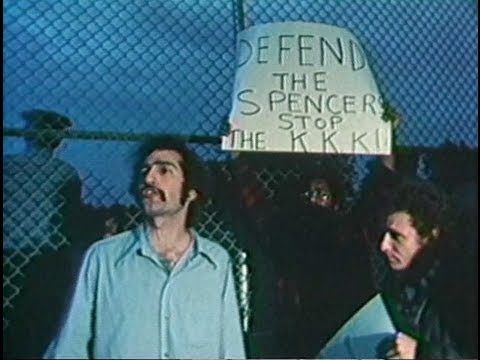
-
Homeowner wrote:
"Whether or not Ephraim actually has tenants saying those things to him directly, I've lived among and done business with the Hassidic community enough to know that his perspective on the impacts of blacks on his real estate are not the exception to the rule."
@homeowner -
I think most people engaged in arbitrage have a distain for people who thwart their plans, and love to take advantage of less-than-savvy buyers and sellers.
WNYC has a good piece today on how real estate professionals look for less than savvy sellers and buyers, by playing on their racial fears and stereotypes: http://www.wnyc.org/story/historian-says-dont-sanitize-how-our-government-created-the-ghettos/
It is all about knowing your customer base, and what they define as "value".
-
I see this all the time (though, thankfully, not in my building). The younger, whiter, upper middle-class bred kids from the universities like Oberlin, Smith, Penn State, the UCs, end up existentially warring with their neighbors of color. The kids get all uptight about things like noise, music, where the trash gets put, stoop sitters. They snitch to the superintendent or landlord and complain to their friends about the neighbors they don't like, such as those who play loud music during the summer. Some landlords and supers, shrug their shoulders and say, "This is a city. Not a suburb. Get used to it." Other landlords see the opportunity to legally evict long-time tenants. The kids are happy when the people they have warred against leave and are replaced with "classier" tenants. Many of them don't realize that the people are probably heading to ENY or the Bronx or leaving the city or piling up with relatives or putting their stuff in storage or on the street so they can go into a shelter. I hope that if they knew what happened to their noisy neighbor with the pit bull puppy, and that it was their bourgeois expectations that f**cked them over, they would change their attitudes.
-
@homeowner, I don't know if when you say "his community" about Ephraim you mean the landlords in general or Hassidic Jews in particular, but it reads to me as the latter in a way I hope you didn't intend. I'm not going to say that the Hassids aren't prejudiced - they distrust anyone who isn't Hassidic - but, as I think you're getting to in some of your other posts, to blame them for racial segregation in our communities is closing your eyes to the wider issues.
Because of our egalitarian norms and the real wealth and income differences between blacks and whites, it’s easy to conclude that white preference for white neighborhoods is a kind of class discrimination, which we can fix through active, interventionist policy. But in this situation, the answer we might want isn’t the one that’s true. For white homebuyers, race matters, and not just as a proxy for class.
The main vehicles for this finding are a series of experiments from Maria Krysan, a sociologist at the University of Illinois at Chicago. In more than a decade’s worth of studies, Krysan and her collaborators have looked at the relationships among neighborhood desirability, class, and race, drawing from surveys and interviews with whites, blacks, and other groups.
In one experiment Krysan and her researchers developed 13 videos showing five neighborhoods of different social class levels: lower working class, upper working class, blemished middle class, unblemished middle class, and upper middle class. Participants would infer the wealth and income of neighborhoods in the short videos by aesthetic qualities: the size of the lots, the conditions of the homes, and so on. A blemished middle-class neighborhood would have homes with overgrown yards and boarded-up garages, while an unblemished one would have neither.In addition to class characteristics, Krysan also added people. For four of the five neighborhoods—the fifth was empty, as a control—researchers made three variations. Each one had a different racial composition. In one version of the upper-middle-class video, the residents were white. In another they were black. And in another there was a mix. They would wear the same kinds of clothes and do the same kinds of activities. In private, participants would watch the videos—with random assignments for the racial composition—and then rate them in terms of home costs, property upkeep, safety, future property values, and school quality.
For all participants, white and black, class mattered. The wealthier the neighborhood—as inferred by characteristics—the higher the rank. But for whites race was a major influence. “Whites who saw an all-White neighborhood ranked the neighborhood significantly more positively than Whites who saw the identical neighborhood with all Black residents,” writes Krysan. And in turn mixed neighborhoods had higher ratings than black ones but lower ratings than the all-white alternatives. This was true in every neighborhood across every dimension other than property upkeep. If whites saw blacks in the unblemished middle-class neighborhood, for example, they assumed more crime and worse schools than if it were all-white. (Indeed, a 2001 study from sociologists Lincoln Quillian and Devah Pager found that reports of crime and disorder increase with the proportion of black residents in a neighborhood even after you control for the actual levels of crime and disorder.)
An earlier experiment using real-life cities had similar results. Researchers asked respondents in four metropolitan areas—Atlanta, Boston, Detroit, and Los Angeles—to rate 23 communities of different incomes, social characteristics, and racial compositions. Again, class matters, but so does race. With more blacks came a lower rating, even when the neighborhood was prosperous.
I am guessing that the research subjects weren't all Hassidic Jews, somehow. And this is hardly isolated research. -
In many ways, we are not only discussing the various of basis' of segregation, but also the basis' of racial/ethnic/class enclaves.
http://www.urbancenter.utoronto.ca/pdfs/curp/Marcuse_Segregationandthe.pdf
Enclaves are not traditionally looked down upon. -
I am from a Wisconsin suburb. My parents voluntarily put me on a bus to an elementary school in the (black) inner city as part of an integration program. They had black friends in the '70s, and I had playdates with their biracial children growing up.My parents came to visit recently. They were entirely fine with my living in a black neighborhood, and a building with black residents.
Which is to say—Midwesterners are a diverse group of people with diverse opinions. Plenty are racist, but plenty of New Yorkers are, too.However, the fact that I am not a virulent racist doesn't mean that my presence doesn't have the effect of displacing other tenants. The fact that I moved here (and that other people want to stay here) means that there aren't enough apartments to go around, and that the people with the least money will lose the game of musical chairs.Per Daniel Kay Hertz:there’s no way out of being a gentrifier, if you happen to have the social or economic capital that causes gentrification. Regardless of whether you say hi to people on the street or forge cross-cultural social ties, your presence in a non-white, non-affluent communitywill, in fact, make it easier for other liberal arts graduates to move in; to open businesses that cater to you, and not the previously existing residents; to induce landlords to renovate or redevelop their properties to attract other new, wealthier residents who want access to those businesses; and, if your city restricts housing supply (it does) and doesn’t have rent control (it probably doesn’t) [and even if it does, vacated rent controlled apartments get leased to people with higher incomes and credit scores], to ultimately create an economically segregated neighborhood of the privileged.
Similarly, living in a neighborhood where market and regulatory forces have alreadypushed out the low-income means you are helping sustain the high cost of living there, and therefore helping to keep the area exclusive. You can’t escape the role you play in displacement any more than a white person can escape white privilege, because those are both systemic processes that have created your relevant status and assigned its consequences. Among the relevant classes, there is no division between “gentrifiers” and “non-gentrifiers.” You don’t get to opt out.
And if you're curious why so many young Midwesterners live here now, a pretty big part of it is that our hometowns' economies have gone to shit: When my parents were young, young people in Milwaukee made as much money as young people in San Francisco. Today, young people in Milwaukee average $13,000 less anually than in SF, and I'm sure the figures are similar for NYC.Am I an economic migrant? I mostly moved to New York because it's an exciting place to live, but the fact that I can make significantly more money here sure doesn't hurt, and definitely keeps me here in spite of the cost of living— I could pay the PITI on two beautiful 1920s-era 3-bedroom houses down the street from my parents for what I pay for a modest tenement apartment here.What is my conclusion? I don't know. I guess what I'm trying to get at is that systemic factions matter a lot more than the intentions of any individual in this neighborhood. And the decisions of people in Park Slope and Greenwich Village and Carroll Gardens and the Upper West Side and other wealthy white neighborhoods where plenty of young white college graduates would be glad to live, if the housing stock were allowed to grow to accomodate new residents rather than locked down by historic districts and tight zoning.
 -
This is an interesting set of comments in this thread. A lot more mature than some of the angry histrionics one comes across on the other 'clickbait' blogs. I agree with those who have become suspicious of the devil in the details of this 'outrageous' and 'offensive' interview.
While parts or elements of what's being said in Ephraim's are true, the parts that are true are things that everyone here already knows to be true. Yes, rent-stabilized and SRO tenants are bought out with sums of 10,000 or 30,000 or whatever dollars. Yes, people like to replace tenants who pay little rent with tenants who pay a lot of rent. Yes, rents go up by a lot. Yes, it's mostly a matter of supply and demand in a city with a low vacancy rate. Yes, it's a market force. Yes, there is some racism at play. Yes, an all black building can, even in 2015, affect 'values' in the eyes of investors, who can be ruthless. Yes, people engage in unethical and illegal behavior. Yes, there is a racist component.
We all know these things already.
A good exercise for everyone here would be to read the 'conversations on gentrification' taking place on (other) blogs like this. You'll notice racism there, too, but of a different nature.
First we have the talk of the Hassids. It always comes up. The conversation can be mild, as in, "I've worked with the Hassids extensively in real estate and I noticed that they can be racist" to "The greedy Jews are driving out the blacks." See the "Movement to Protect the People" for the latter piece (they post flyers in S. Crown Heights in people's mailboxes saying specifically that). Regardless, those who decry racism should proceed more critically when they read widely-dispersed interviews from "Ephraims" who say crazy things like "every black has a price". Question why a journalist would choose an interview like that, and question why it's being reposted so thoroughly. I'm not saying it shouldn't be - just be aware of what how it might be perceived.
Next, we have talk, on all these blogs, about the evil Midwesterners. Even with the comments in this thread, it starts to border on viciousness. It's even worse on some of the (seemingly) anti-gentrification sites like Gothamist. Every white person is a naive, racist Midwesterner, paying their apartments thanks to trust funds and calling police when people have loud parties (something which is perfectly justifiable under certain circumstances, incidentally), and wishing ill-will of colored people unconsciously, their liberal arts degrees having given them a thick primer of patronizing, unconscious racism. White privilege, etc. Those people don't work, and yet they come in and use white skin to ethnically cleanse the neighborhood. It's all ridiculous when put like that, but it's a theme I read again and again in the anti-gentrification 'blogosphere'.
Those are stereotypes, too.
In a city of 8.5 million people, picking and choose the most outrageous interviews is bound to get you the emotional drive you seek of your readers.
And the blogs are more than happy for the click that generates.
Hell, there's a schizo down the street that hands out on the corner near Fulton and rants loudly about all sorts of stuff. How about we interview him on the topic, I'm sure he'll say something offensive. -
To me, this can not be understood without thinking about why and how:
-enclaves come into existence.
-urbanization is similar to migration in terms of pushes and pulls. -
I'm just going to leave this right here.
http://www.nbcdfw.com/news/local/Affluent-African-Americans-Flocking-To-DeSoto-294232891.html#
"When most people think of growing affluent communities in North Texas, Frisco, Flower Mound and Southlake come to mind; DeSoto should also come to mind.
The southern Dallas County community has grown from 15,000 residents in the 1980's to more than 50,000 people who now call the city home.
Taj Clayton is a partner in the law firm Fish and Richardson and his wife Tonika is a vice president at an education technology company. With their pick of places to raise their two daughters and son, they chose DeSoto.
"DeSoto, for our perspective, was the best place to live, " Taj Clayton said. "It was just a hidden gem that a lot of people didn't know about. There are beautiful hills, undulating landscapes, incredible parks. I feel fortunate to live on a golf course." "We are actually three minutes from my kids school," Tonika Clayton said. "We got some of our friends to move here from Plano."
The couple said there was another attraction.
Like the Claytons, most of DeSoto's new residents are middle class and affluent blacks.
"It's a really nice bedroom community where you see a lot of successful people who live here and, demographically, there are a lot of African-Americans."
That's something very familiar to DeSoto Mayor Carl Sherman.
"Since 2000-2010, there's been a large migration of African-Americans to North Texas," Sherman said. "In fact we're the leading [community] second only to Atlanta for the migration from north to south. And many of those have chosen to live in the city of DeSoto because of the caliber of the citizens that we have here."
According to the U.S. Census, 68 percent of people in DeSoto are black or African-American compared with 25 percent in Dallas and 18.9 percent in Fort Worth.
In 2013, the median household income in DeSoto is $60,945. The statewide average is $51,900. The average in Dallas is $42,846. Only nine percent of DeSoto residents live below the poverty line.
Despite the positives, Sherman believes some real estate agents steer potential white residents away from DeSoto.
"They were shown some of our nice, pristine communities, well-manicured yards and the realtor would say, 'Are you sure you want to live here?'" Sherman said. "Whereas, conversely, African-Americans and Hispanic families would be told all the wonderful things about DeSoto. So you can understand if you have that kind of steering that's going on in a marketplace not everyone is not going to be influenced by that." -
@clayfilms -
You will likely enjoy this story about an extended family member and her husband. They share my hue.
In the mid-90s, she and her new husband were both graduates from good colleges, about 26 years old and moved into neighborhood that was Af-Am like Desoto.
In their case, the neighborhood was outside of Atlanta, GA. Unlike the phone call example I give above, her parents were fine with her decision.
Her mother enjoys telling the story while consuming beer:
The two of them moved into the neighborhood with the implicit belief that it was nice because of the "caliber of the citizens". Like DeSoto, the employment, school achievement and other markers were all solid. To test the waters, they took several walks around the neighborhood before buying and found the residents to be very welcoming.
To their parents amazement, they somehow reached the conclusion that they were improving the neighborhood by moving into it, and could -therefore- be more lax than their neighbors in keeping up their home. It quickly became the ugliest house on the block and was seen as potentially bringing down the area's attractiveness.
Within 6 months of moving in, they received two letters from the block association. The letters were signed by most of the members, and said the equivalent of "please mow your lawn more often".
They complied. They lived there for about two years before moving to another city as a result of a job transfer.
....her parents love the story. They seem to perceive it as one of the moments in which her worldview was changed against her will.
Much to their daughter's chagrin, they tell the story at every family reunion. I know my aunt pretty well, she'd probably be willing to tell it at your next family reunion if there is a few cold beers available.
-
So, let me get this straight. White trash is no more welcome in more affluent black neighborhoods than in more affluent white neighborhoods?
-
I don't believe my relatives would have felt they were improving an affluent white neighborhood by merely moving into it.
They may have also taken better care of their lawn to earn the respect of their neighbors. -
That just means your relatives were jerks, though. It doesn't make them representative.
-
We each get to decide whether a sample represents the population from which it is drawn.
The author of the book from which this NY Mag article derives will likely have to defend such concerns at his upcoming reading:
Wednesday, May 20, 7:30 PM
DW Gibson presents The Edge Becomes the Center: An Oral History of Gentrification in the Twenty-First Century
In conversation with Joseph O’Neill
http://www.greenlightbookstore.com/event/dw-gibson-joseph-o’neill
People (orthodox jews, real estate agents, etc) will predictably show up to object to Ephraim's views and statements to distance themselves from him and/or affirm their superiority by denoucing them.




Howdy, Stranger!
Categories
- 40K All Categories
- 27.1K Neighborhoods
- 5.1K Crown Heights/Prospect Lefferts Gardens
- 7.1K Prospect Heights
- 2.3K Fort Greene, Clinton Hill, Bed-Stuy
- 8K Park Slope
- 549 Williamsburg, Greenpoint, Bushwick
- 442 Flatbush/Midwood/Ditmas Park
- 657 BoCoCa (Boerum Hill, Cobble Hill, Carroll Gardens)
- 151 Red Hook
- 104 Gowanus
- 304 Bay Ridge/Bensonhurst
- 130 Coney Island, Brighton Beach, Sheepshead Bay
- 270 Brooklyn Heights, DUMBO and Downtown
- 598 Windsor Terrace / Kensington
- 673 Greenwood Heights and Sunset Park
- 749 Brooklyn and Beyond
- 6.3K Stuff
- 86 Brooklyn Back When
- 1.2K Brooklyn Pets
- 257 Brooklyn Kids
- 241 Brooklyn Eats
- 51 Brooklyn Booze
- 3.6K The Lounge / Random Stuff
- 611 Brooklyn Politics
- 122 Brooklyn Sports and Fitness
- 111 Brooklyn Photos
- 339 Site Issues
- 8 Frequently Asked Questions (FAQ)
- 6.2K Listings
- 1.1K APARTMENTS and REAL ESTATE
- 1.3K Sales Openings Events
- 2.3K The Classifieds